If you’ve ever stepped into a supermarket on a sweltering summer afternoon and noticed cold air fogging over display case glass or spotted puddles near refrigerated aisles, you’ve witnessed one of the quietest, costliest headaches for supermarket refrigeration systems—humidity. For nearly 12 years, I’ve worked as a supermarket refrigeration supplier, installing, troubleshooting, and maintaining systems for stores across the Midwest, and I can tell you humidity isn’t just a minor inconvenience; it’s the single biggest driver of hidden costs, premature equipment failure, and inconsistent product safety in refrigeration setups. Most store operators see humidity as a side effect of opening doors and cold displays, but understanding its specific impacts helps you build systems that run smoother, last longer, and save tens of thousands of dollars a year. Let’s break down what humidity does to supermarket refrigeration, why it matters, and what we’ve learned working with store teams to mitigate these effects. Supermarket Refrigeration
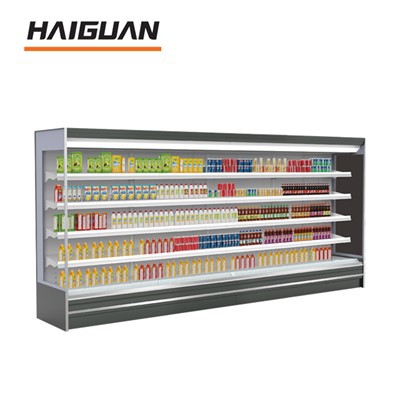
First, let’s ground this in basic science. Humidity is the amount of water vapor in air, measured as relative humidity (RH)—the percentage of moisture the air holds compared to the maximum it can hold at a given temperature. Warm air holds far more moisture than cold air; for every 10°F drop in air temperature, the amount of moisture air can hold drops by roughly 50%. That’s a critical stat for refrigeration: supermarket display cases typically run between 34°F and 40°F, while store aisles stay around 75°F for shopper comfort. When warm, high-RH aisle air seeps into the cold refrigerated space, it cools rapidly, and its ability to hold moisture plummets. The excess water vapor condenses into liquid—whether on display case glass, evaporator coils, or ductwork—and that’s where the problems start.
The most immediate, visible effect of humidity is condensation on display case glass. Walk into any supermarket, and if you run your hand along a cold deli or dairy case cover, you’ll feel that damp, cool layer. At first glance, this seems harmless, but it’s a consumer experience killer. We once worked with a 60,000-square-foot grocery chain in Chicago that saw 12% higher dairy case shrink in the summer—customers couldn’t read the price tags or see the yogurt containers clearly, so they’d grab the first similar item or skip the dairy aisle entirely. Another store in Detroit reported a 8% drop in deli sales during heatwaves because fogged glass made pre-packaged sliced turkey look unappetizing. The solution isn’t just wiping the glass—though that adds 2–3 hours of extra labor per week per display case—it’s about managing humidity at the source.
Beneath the surface, condensation on evaporator coils is far more damaging. Evaporator coils are the heart of a refrigeration system; they absorb heat from the air inside display cases to keep products cold. When humid air hits these cold coils, condensation forms, and if the humidity is high enough, that moisture freezes into a thin layer of ice on the coil. Ice is a terrible insulator, so it blocks the coils from doing their job. We learned this the hard way in 2018, when a rural grocery store in Iowa called us in mid-July because their meat cases were warming to 45°F, and they’d already gone through two compressor repairs in two months. When we pulled the coils, we found a ¾-inch layer of ice built up—humidity from open produce doors and a broken aisle dehumidifier had been turning into ice every time the compressor cycled, and the system couldn’t defrost properly. That ice increased the system’s energy use by 38%: it had to run longer and work harder to keep cases cold, adding $1,200 a month to their electric bill. And because the compressor was cycling nonstop, it burned out prematurely—we had to replace it 18 months early, at a cost of $4,500. That’s a $18,900 annual hit from humidity-related issues for a 30,000-square-foot store, and that number goes up with store size.
Next, humidity drives evaporator fan failure, a problem I see every summer. When condensation forms on fans, it drips onto the motor and wiring, causing corrosion. Even modern, sealed fan motors aren’t immune—over time, the moisture eats through the seal, leading to shorts or seized motors. A mid-sized store in Cleveland we service had three deli case fan motors go out in June 2022; each replacement cost $220, plus $150 in labor, and each failure left the entire deli case out of commission for four hours during peak Saturday shopping. That meant we had to move $2,000 worth of perishable chicken and cheese to a temporary reach-in cooler, adding another $800 in labor and rental fees. When we inspected the site, we found their main dehumidification unit was broken, so aisle RH hit 70% on 85°F days—way above the recommended 50–55% for supermarket interiors. That humidity was directly causing the fan issues, not wear and tear from age, as the store manager initially thought.
Beyond equipment damage, humidity is a silent threat to food safety, which is non-negotiable for supermarkets. The FDA’s Food Code requires refrigerated foods to stay at 40°F or below to prevent harmful bacteria like E. coli and salmonella from growing. When ice builds up on evaporator coils, the airflow through the display case drops, creating cold spots and warm spots. A 2021 study by the American Society of Heating, Refrigerating and Air-Conditioning Engineers (ASHRAE) found that display cases with ice-covered coils have temperature fluctuations of up to 10°F, compared to 2°F for clean, properly defrosted coils. We tested this at a store in Indianapolis last summer: their dairy case had three ice-covered coils, and we found one spot where milk was sitting at 48°F, right above the FDA’s safety threshold. That’s a huge liability—if an inspector stops by during a heatwave and finds that, a store can face a $1,000 fine, plus the cost of throwing out thousands of dollars in spoiled product. We once worked with a grocery chain in St. Louis that had to discard $12,000 worth of ground beef, deli meat, and salad when their system failed a health inspection in August—all because humidity-related ice buildup caused temperature swings.
Now, I know what some operators are thinking: “We already have dehumidifiers, why is this still a problem?” The issue is that most dehumidifiers are sized incorrectly for a store’s layout, or they’re set to run only during certain hours. Aisle doors opening and closing 20 times an hour on busy weekends adds a surge of humid air, and a dehumidifier that’s sized for 50,000 square feet can’t handle the extra load of a 10,000-square-foot produce section with two double-wide doors. Another mistake we see is operators turning down display case temperatures too low to fight condensation—they think if the case is colder, moisture won’t build up, but that just makes the evaporator coils even colder, leading to more ice, higher energy use, and compressor strain. We had one store in Columbus that set their deli case to 32°F in July to stop glass fogging, and their compressor failed after just two years, 18 months earlier than expected. That’s a Band-Aid that costs way more in the long run.
So, what do we actually do to fix humidity-related issues for our supermarket clients? Over the years, we’ve developed a holistic approach that’s tailored to each store, not a one-size-fits-all fix. First, we conduct a full audit of the space: we test RH levels in aisles, near display case doors, and around coolers; we check evaporator coil cleanliness; and we map how often doors open during peak hours. For example, we found that the 60,000-square-foot Chicago chain I mentioned earlier had 30 double-wide produce doors opening an average of 40 times an hour on Saturdays, adding 2 gallons of extra water vapor into the air every hour in summer. We installed a smart dehumidification system that adjusts based on real-time aisle RH, paired with low-convection display case doors that cut the amount of humid air seeping into coolers by 60%. We also adjusted their defrost cycles to run based on humidity and coil temperature, not just time—instead of defrosting every 8 hours, the system only defrosts when it detects ice buildup, cutting defrost time by 40% and reducing energy use.
Another key step we take is upgrading the insulation of display case ducts and cooler walls. Older stores often have thin insulation that allows warm air to seep into cold spaces, leading to extra condensation. For a 40,000-square-foot store, adding closed-cell spray foam insulation to cooler walls and display case covers reduced humidity-related coil issues by 75% in our first year of service with the store in Iowa. We also recommend regular, proactive maintenance checks in summer: every 6 weeks, we inspect coils, clean fan motors, test dehumidifier settings, and calibrate temperature sensors. That’s far cheaper than waiting for a compressor to fail mid-heatwave or a health inspection fine.
The data backs up what we’re seeing on the ground. A 2022 report from the National Grocers Association found that humidity-related refrigeration issues cost independent supermarkets an average of $27,000 a year in energy, repairs, labor, and lost sales. For large chains, that number jumps to over $100,000 annually, depending on store size. The good news is that most of these costs are avoidable with the right system design and maintenance. We recently worked with a grocery store in Cleveland that switched from a basic dehumidifier system to our custom humidity-controlled setup; in their first summer, their electric bill dropped by $1,400 a month, they cut compressor and fan repair costs by 80%, and their dairy sales went up 9% because customers could easily read labels and see products clearly. That’s a return on investment of less than 18 months, and we’ve seen similar results at every store we’ve serviced over the past five years.
I’ve been in this industry long enough to know that supermarket operators are stretched thin—they’re dealing with labor shortages, tight profit margins, and changing customer expectations. Humidity isn’t something you can ignore, though; it’s a hidden drain on your operations that shows up in your monthly electric bill, your repair invoices, and your bottom line. The best part is that you don’t have to handle this alone. As a supermarket refrigeration supplier, we don’t just sell parts or install systems—we partner with stores to audit their spaces, design custom humidity solutions, and provide ongoing maintenance to keep your refrigeration running smoothly, even on the hottest, most humid days of the year.
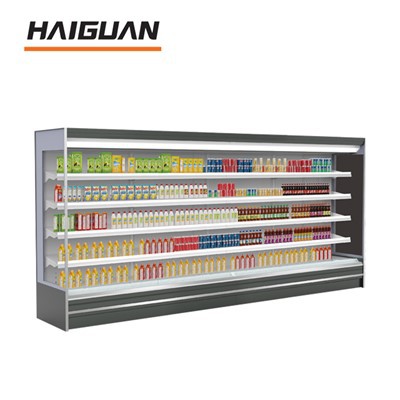
If you’re dealing with fogged display glass, frequent fan or compressor repairs, skyrocketing energy bills, or food safety concerns tied to your refrigeration, we’re here to help. We’ll send a team to your store at a time that works for you (usually off-peak hours like early morning or late night) to conduct a free humidity and refrigeration audit, identify exactly where your system is being impacted, and walk you through solutions that fit your budget and your store’s needs. Don’t let humidity drain your profits or put your products at risk—reach out to start the conversation today.
Refrigerated Display Case References
- American Society of Heating, Refrigerating and Air-Conditioning Engineers (ASHRAE). 2021. HVAC Applications Handbook: Supermarket Refrigeration. ASHRAE, Atlanta, GA.
- National Grocers Association (NGA). 2022. Hidden Costs of Environmental Factors in Independent Supermarket Operations. NGA, Arlington, VA.
- U.S. Food and Drug Administration (FDA). 2023. Food Code: Refrigeration and Food Safety Requirements. FDA, Silver Spring, MD.
- Department of Energy (DOE). 2020. Energy Efficiency in Commercial Refrigeration Systems. DOE Office of Energy Efficiency and Renewable Energy, Washington, D.C.
Jinhua Kate Refrigeration Equipment Co., Ltd.
We are one of the most professional supermarket refrigeration manufacturers in China, also support customized service with low price. Please rest assured to wholesale bulk high quality supermarket refrigeration for sale here from our factory. If you have any enquiry about quotation, please feel free to email us.
Address: Room 101, No. 21, Southwest Sixth Road, Xin’an Village, Xin’an Community, Duohu Subdistrict, Jindong District, Jinhua City, Zhejiang Province
E-mail: 2528940364@qq.com
WebSite: https://www.katekool.com/
