Hey everyone, let’s cut to the chase—if you’re in the market for special-duty fans, you know these aren’t your run-of-the-mill box fans for your living room. These heavy hitters work in places you don’t want to: industrial warehouses, mining sites, sewage treatment plants, maybe even those big nuclear power facilities (yikes, high stakes). When you’re a supplier like me, people don’t just care about how well your fans move air—they care about whether those fans won’t give out mid-shift, or worse, cause a safety hazard. Today, I wanna break down the certifications that actually matter for special-duty fans, not just the random ones companies slap on marketing brochures to look official. Let’s keep this real, no stuffy jargon, just what I’ve learned dealing with clients for years. Special-Duty Fans
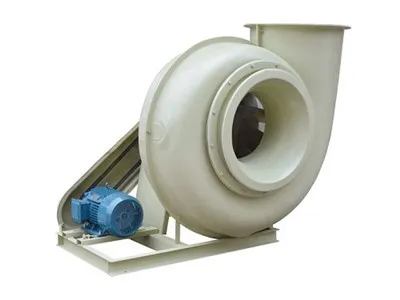
First off, let’s get on the same page about what a special-duty fan is, because some folks mix ’em up with regular industrial fans. Special-duty fans are built for extreme, niche conditions—think fans that have to run nonstop in 120-degree heat, or move explosive fumes without sparking, or handle corrosive sewage air that would eat through a standard fan’s blades in a month. So the certifications have to match those harsh use cases, not just a general “built tough” label. The biggest one I’d put at the top is the MSHA certification for mining and underground use. If you’re selling fans for coal mines, metal mines, or underground tunnels, MSHA (that’s the Mine Safety and Health Administration, for the uninitiated) isn’t a “nice-to-have”—it’s a law. Last year, I had a small mining client reach out with a fan they’d bought from a no-name supplier, and it failed MSHA inspection because the motor’s electrical components weren’t sealed tight enough to prevent methane from triggering a spark. That fan got pulled from the site, and the company had to fork over thousands in fines. MSHA tests every part: the motor’s spark resistance, blade durability, how the fan holds up to constant vibration from mining equipment. No MSHA? You can’t sell fans for underground mining, full stop. That’s non-negotiable.
Next up, for fans dealing with explosive atmospheres—like chemical plants, grain elevators, or areas with volatile solvents—you need ATEX certification. Wait, some people call it CE-ATEX, but ATEX is the actual certification standard from the European Union, and now it’s widely adopted in North America too for hazardous locations. ATEX splits hazardous areas into categories based on how likely an explosion is, and your fan has to match the zone it’s going into. I had a chemical manufacturing client a couple years back who was using a fan that was only ATEX-certified for Zone 2 (low explosion risk) in a Zone 1 area (high risk, where explosive fumes are present often). That’s a huge mistake—Zone 1 fans have to have intrinsically safe circuits, no exposed wiring that could arc, and blades made of non-sparking materials like aluminum or bronze. The standard for these got updated in 2021, too, so a lot of old certifications are expired now. I always make sure my team checks the ATEX date and zone explicitly, not just that it has the logo. A friend of mine runs another fan company and got burned last year selling outdated ATEX fans to a fertilizer plant—they had to issue a full recall, which cost them way more than any short-term profit.
Then there’s NFPA and OSHA compliance, which is non-negotiable for basically all industrial special-duty fans, especially in fire-related roles. Fans used for smoke evacuation in buildings, or to ventilate areas during industrial fires, have to meet NFPA standards—NFPA 20 for fire pumps, wait no, NFPA 1911 for mobile fire apparatus, and NFPA 204 for smoke control systems. OSHA, on the other hand, is the US workplace safety agency, so they set rules for things like fan noise levels (which is a big one—special-duty fans running 24/7 at a warehouse can hit 100 dB, which is way over OSHA’s 8-hour exposure limit of 90 dB), and fan guarding to keep workers from getting their hands caught in moving blades. A lot of new suppliers skip the noise testing, cutting corners on insulation, which leads to OSHA fines. Last year, one of my clients got a $15,000 OSHA fine because their old fan didn’t meet noise standards, even though the fan worked fine. I make sure every fan I sell has a noise test report that aligns with OSHA’s requirements, plus we add optional sound insulation for clients in tight spaces.
Wait, what about fans for extreme temperatures? Like, fans that have to run in -40 degree winters in northern Canada, or 200-degree heat in steel mills? That’s where UL Certification for temperature resistance comes in, specifically UL 507 for fans, wait no—UL 705 for industrial fans. A lot of cheap fans claim they work in extreme temps, but UL tests them by running them at the maximum (and minimum) rated temp for 100 hours straight, checking for motor burnout, blade warping, or seal failure. I once tested a competitor’s fan that was rated for 180 degrees, but when we ran it in a 190-degree oven for 2 hours, the plastic motor housing melted. The UL test would’ve caught that immediately. If you’re working in steel, glass manufacturing, or cold storage, this certification is make-or-break. No UL 705 temp rating? Your fan will die in a month.
Oh, and let’s not forget corrosion resistance certification for fans used in sewage treatment plants, marine environments, or chemical processing. The go-to here is NACE MR0175/ISO 15156—that’s the standard for materials resistant to sulfur compounds and corrosive chemicals. Sewage air has hydrogen sulfide, which eats through steel like acid. Last year, a sewage plant in Florida bought cheap fans from a supplier that used regular steel blades instead of NACE-certified stainless steel, and the blades rusted through in 6 months, leaking metal particles into the water. They had to shut down part of the plant for repairs, costing them millions. NACE tests every material the fan is made of, so you know it won’t corrode even after years in harsh, corrosive environments. I always work with manufacturers that use NACE-certified materials, because nothing kills a client relationship faster than a fan that falls apart too soon.
Now, here’s the thing: there are a lot of “certifications” out there that are basically just made up. Like, some companies will put a fake logo that looks like MSHA on their fans, but it’s not actually registered with the agency. Or they’ll claim “ATEX-approved” but it’s for a different region, or expired. As a supplier, I make it a rule that I never sell a fan without providing the actual certification document, not just a sticker. Clients can look it up on the official agency’s website—MSHA has a database, ATEX has a portal, UL has a search tool. If a supplier can’t pull up the certification number online, walk away. I’ve had clients come to me after getting scammed by a supplier with fake certifications, and it’s a nightmare to fix. We always send over full, verifiable docs before any purchase, no exceptions.
Also, not all special-duty fans need every certification. It depends on what they’re used for. If you’re selling a fan for a general warehouse that doesn’t have explosive fumes or underground mining, you don’t need MSHA or ATEX—you just need OSHA and UL safety standards. But if you’re selling a fan for a grain elevator, which has flour dust that’s explosive, you definitely need ATEX and NFPA for fire safety. I always ask clients about their specific use case first, then recommend the right certifications, instead of just pushing a one-size-fits-all fan. That’s how I’ve built repeat business over the years—listening, not just selling.
Wait, let’s talk about something that’s often overlooked: ISO 9001 quality management system certification. This isn’t a fan-specific safety certification, but it matters because it means the manufacturer has consistent processes for building the fans. No ISO 9001 means they might build one fan that works great, and the next one has defects. I’ve worked with manufacturers that have ISO 9001, so their fans are uniform, with consistent testing. I once got a batch of fans from a supplier without ISO, and 2 out of 10 had wiring defects that would’ve caused sparking. That’s a huge risk, so now I only work with ISO 9001-certified manufacturers.
At the end of the day, special-duty fans are not a commodity. A standard box fan is $20, and you can buy it at any hardware store, but a special-duty fan can cost thousands, because it’s built for extreme conditions. So you need to make sure that investment is safe, and that means the certifications check out. You don’t want to cut corners on certifications—you’ll end up paying way more in the long run, in fines, repairs, or even safety incidents.

If you’re shopping for special-duty fans, don’t just go by the marketing hype. Ask for the actual certification numbers, verify them, and match the certifications to your specific environment. And if you’re looking for a reliable supplier that doesn’t skip on certifications, reach out to us. We’ll sit down with you, figure out exactly what kind of fan you need for your job, and make sure every single certification is legitimate and up-to-date. No fake stickers, no expired docs, just fans that work when you need them to.
Centrifugal Fans References:
- Mine Safety and Health Administration. (n.d.). 30 CFR Part 36 – Approval and Certification of Ground Mining Electrical Equipment. U.S. Department of Labor.
- European Commission. (2019). ATEX 114 Directive (2014/34/EU) on equipment and protective systems intended for use in potentially explosive atmospheres.
- Underwriters Laboratories. (2022). UL 705 – Standard for Industrial Fans.
- National Fire Protection Association. (2021). NFPA 204 – Standard for Smoke and Heat Venting.
- NACE International. (2020). NACE MR0175/ISO 15156 – Petroleum and Natural Gas Industries – Materials for Use in H2S-Containing Environments in Oil and Gas Production.
- Occupational Safety and Health Administration. (2023). 29 CFR Part 1910 – Occupational Safety and Health Standards, Subpart D – Walking-Working Surfaces and Subpart G – Occupational Health and Environmental Control.
- International Organization for Standardization. (2015). ISO 9001 – Quality management systems — Requirements.
Address: Dongchen Industrial Park, Zhoucun District, Zibo, Shandong, China
E-mail: sales@qiyuefan.com
WebSite: https://www.qiyuefan.com/
