If you’ve ever stood on a manufacturing floor and watched an industrial crusher gnash through piles of scrap metal, construction debris, or raw aggregate, you know two things: these machines are the backbone of countless industries, and they demand nothing less than total respect. For the last 12 years, I’ve run an industrial crusher supply business. I’ve spent more hours than I can count troubleshooting units at job sites, listening to operators’ frustrations, and patching up broken equipment—and, more importantly, helping teams avoid the near-misses and accidents that too often come with running heavy industrial gear. A few years back, I sat in on an OSHA incident report for a mid-sized construction company that lost a good operator to a preventable accident with a jaw crusher. That day changed how I talk about safety with every client I work with. Accidents don’t “just happen” with crushers—they’re the result of small oversights, skipped maintenance, and outdated training that add up fast. Let’s talk about what actually works to keep teams safe, straight from the guys who build, sell, and run these machines every day. Industrial Crushers
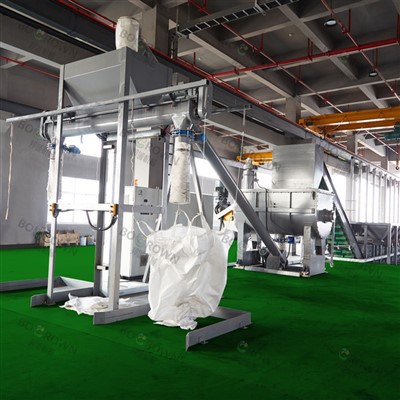
First, let’s get one critical rule front and center before we dive into any other tip: every crusher on the market is built with built-in safety features. But those features only work if you use them. I can’t tell you how many times I’ve walked a job site and found operators propping open a crusher’s safety guard to fix a jam by hand, or bypassing an emergency stop button to test a sensor. That’s not laziness—that’s a misread of how these machines are designed. Jaw crushers, for example, have interlocking guards that are wired directly into the power supply; if the guard is open, the crusher won’t turn on. Skip that guard, and you’re removing the single most effective physical barrier between moving parts and human limbs. I saw a team once try to clear a blockage in a cone crusher without locking it out first—they thought the power was off because the breaker was flipped, but a faulty relay left the flywheel spinning. One slip, and his arm would’ve been severed at the shoulder. Lockout/Tagout (LOTO) procedures aren’t OSHA red tape—they’re the reason that operator’s kid still has a dad. The first step to preventing crusher accidents is to treat every guard, every interlock, and every LOTO lock as non-negotiable, not an afterthought.
Next, operator training isn’t a one-and-done onboarding task. When we sell a crusher, a lot of clients see the training add-on as an unnecessary cost. But here’s the thing: 78% of crusher-related accidents are caused by operator error, according to a 2022 study by the National Institute for Occupational Safety and Health (NIOSH). That number doesn’t lie. I had a client last year who hired two new operators to run a portable impact crusher for a demolition job. The previous owner had done a 30-minute “show how” on day one, and that was it. Within three days, one of the new guys tried to feed rebar that was thicker than the crusher’s maximum feed size. It jammed, and when he went to pry it loose with a crowbar, the crusher lurched forward as the jam cleared, catching the crowbar and sending it flying into his wrist. We fixed his crusher, but he missed six weeks of work, and the client lost a week of productivity on the job. Proper training needs to go beyond “don’t stick your hand in the machine.” It needs to cover specific limits: maximum feed size for each crusher model, proper ways to clear jams (never with tools while the power is on), how to read oil pressure and temperature gauges that signal a malfunction before it leads to a failure, and what to do if an emergency stop doesn’t work. It should also include hands-on practice with the actual crusher—not just a PowerPoint presentation. We now offer monthly refreshers for all our clients’ teams, even years after we sell them a unit, because skills fade, and complacency creeps in.
Then there’s maintenance that’s scheduled, not reactive. I see it all the time: teams wait until a crusher breaks down to fix it, because that fits their budget better. But a crusher running on low oil or with a worn jaw plate is far more likely to jam, overheat, or seize up—all situations that lead to accidents. Take lubrication, for example. Conveyor chains, bearings, and eccentric shafts need specific viscosity oil at specific intervals. If you use the wrong oil or skip a week of lubrication, friction builds up, parts wear faster, and the crusher can lock up without warning. A client in the steel industry learned this the hard way two years ago. They ran their primary jaw crusher 12 hours a day, 6 days a week, but only changed the gear oil once a year. Last quarter, the oil broke down, and the main bearing seized mid-cycle. When the operator tried to crank the crusher free, the flywheel spun backward, hitting him in the chest and breaking three ribs. That incident cost him $12,000 in workers’ comp, a week of downtime, and a new bearing that would’ve cost a fraction of what it cost to fix the injury and lost time. A proper maintenance schedule for crushers breaks down into daily, weekly, and monthly tasks. Daily checks should include walkaround inspections of guards, emergency stops, and feed chutes to make sure there’s no debris buildup. Weekly checks are for fluid levels, belt tension, and jaw plate wear. Monthly tasks might include tightening bolts, testing interlock sensors, and calibrating pressure gauges. The key here is to stick to the schedule, and to assign a specific person to own maintenance—no more blaming “the team” when something slips.
Another area that’s often overlooked but is a huge risk factor is site design and feed material management. You can have the safest crusher and the best-trained operators, but if your feed pile is mismanaged, you’re still going to have accidents. Let’s start with feed size. Every crusher model has a maximum feed opening and maximum allowable feed size. Feeding a jaw crusher with a rock that’s even a few inches too big doesn’t just jam the machine—it can cause the crusher’s flywheel to jump or the jaw plate to shift, sending chunks of debris flying outward. I once visited a quarry where operators were using an old jaw crusher that could handle 3-foot rocks, but they were feeding it 4.5-foot boulders because they didn’t want to spend time breaking them down first. One boulder slipped into the crusher at an angle, and the jaw moved unexpectedly, launching a piece of rock 20 feet into the air and hitting a bystander who was 50 feet away. He survived, but he spent three months in the hospital. Then there’s feed contamination. Any debris that’s not supposed to be in the feed—wood, plastic, rebar, even pieces of metal from old equipment—can cause jams or damage crusher components. I’ve seen a piece of 1-inch rebar jam a cone crusher so bad that it split the crusher’s frame, sending shrapnel into a nearby work zone. The fix here is simple: install a pre-screen before the crusher that can sift out large rocks and foreign debris, and mark clear feed limits for operators. Also, make sure there’s a safe distance between the feed point and the crusher—no standing directly over the feed chute while the machine is running, and no climbing onto the feed pile to adjust material without locking out power first.
Last, but certainly not least, is fostering a culture of safety where no one is afraid to speak up. This is the part that’s less about machines and more about people, but it’s the most impactful change I’ve seen in the last decade. Early on, I’d visit job sites where operators would hide small near-misses—like a jam that almost caught their hand, or a faulty guard that they didn’t report—because they didn’t want to get in trouble or seem incompetent. That’s a recipe for disaster, because every unreported small issue turns into a big accident. A team that feels like their safety is a priority will speak up when something is wrong, and that’s how you catch risks before they lead to harm. We work with all our clients to set up a system for reporting near-misses without fear of punishment—no questions asked, no write-ups, just a conversation about what happened and how to fix it. I had a client who implemented this after that OSHA incident I mentioned earlier, and a few months later, an operator reported that the emergency stop button on their impact crusher was sticking. They fixed it before it failed during an emergency, which would have been a life-threatening situation. Culture also means holding regular safety huddles—10 minutes every morning to talk about what’s on the agenda that day, any potential risks, and to remind everyone of the basics. It sounds simple, but it works.
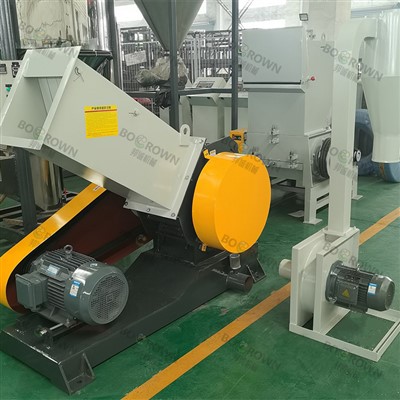
At the end of the day, industrial crushers are powerful, essential tools, but they don’t have to be dangerous. The best safety strategies aren’t about expensive new parts or overcomplicated rules—they’re about following basic, proven steps: using safety features as designed, training operators consistently, sticking to a proactive maintenance schedule, managing feed materials properly, and building a team that cares about each other’s safety. If you’re in the market for an industrial crusher, or looking to improve the safety of the units you already operate, I’m here to help. We don’t just sell machines—we work with every client to customize training, maintenance plans, and site safety practices that fit their specific job and team. There’s no one-size-fits-all solution, and no risk is too small to ignore. If you’re ready to talk through what you need, reach out, and we can connect to make sure your team stays safe on the job.
Crushing and Grinding Integrated Machine References
- National Institute for Occupational Safety and Health (NIOSH). (2022). Crusher-Related Injuries and Fatalities in Construction and Manufacturing. Centers for Disease Control and Prevention.
- Occupational Safety and Health Administration (OSHA). (2021). Lockout/Tagout: A Guide to Controlling Hazardous Energy. U.S. Department of Labor.
- Construction Safety Association of America. (2020). Preventive Maintenance Best Practices for Heavy Industrial Equipment. CSA Publishing.
- International Society of Automation (ISA). (2021). Functional Safety for Heavy Machinery Systems. ISA Standards and Practice.
ZJG BC Machinery Co., Ltd.
As one of the most professional industrial crushers manufacturers and suppliers in China, we’re featured by quality products and good price. Please rest assured to buy cost-efficient industrial crushers for sale here from our factory. Contact us for custom service and OEM service.
Address: No.8 Lexi Road, Leyu Town, Zhangjiagang City
E-mail: sales@bcextruder.com
WebSite: https://www.bcextruder.com/
