What’s the Production Capacity of an Average Electrical Cabinet Production Line? Electrical Cabinet Production Line
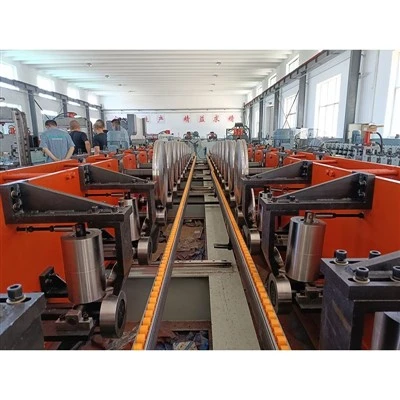
If you’re a facility manager, electrical contractor, or anyone who’s ever had to wait on cabinets to show up for a new build, you’ve probably wondered this: how fast is a typical production line cranking these things out? I work in electrical cabinet manufacturing—been doing this for 12 years, running our team and troubleshooting lines that feel like they’re either moving too slow to fill orders or too fast to catch mistakes—and I can tell you it’s not a one-size-fits-all number. There’s a lot that factors into it, and I’m gonna break it down like I would when I’m walking a new customer through our shop floor, no fancy jargon, just real stuff.
First off, let’s get one thing straight: when people ask “average production capacity,” they’re usually thinking of either units per day or per week, right? But it’s not just slapping boxes together. Electrical cabinets aren’t just metal shells—they have to fit specific gear, meet code standards, and come with the right knockouts, cutouts, and wiring pathways. So the line’s capacity changes based on what kind of cabinet we’re building, too. We’ve got small ones—like those 12x12x6 inch ones for basic power outlets in a retail space—and big ones, 60x80x20 inch monster cabinets that hold whole electrical panels for a hospital wing. The line doesn’t move at the same speed for both, and neither do most production lines I’ve seen.
Let’s start with the baseline. For a standard, run-of-the-mill electrical cabinet—let’s say a NEMA 1 rated indoor cabinet that’s used for office buildings, retail spaces, or small industrial setups—your average mid-tier production line (not the fancy automated one that costs a million dollars, not the super basic hand-built one) puts out somewhere between 25 and 50 cabinets per 8-hour shift. Wait, I know that’s a range, not a number, so let’s dig into why.
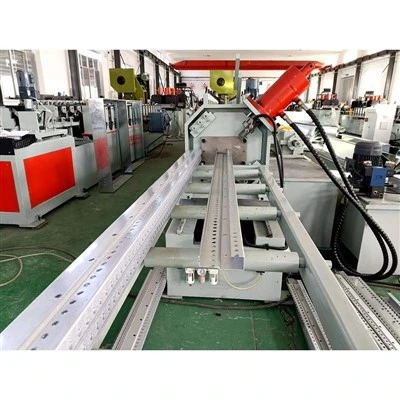
First, what makes the line actually move? A proper cabinet production line isn’t just guys standing around a table putting parts together. It’s a flow process: metal sheet comes in, gets cut to size, bent into the shell, prepped for holes and knockouts, then moves to the assembly station where we add the door, hinges, latches, then the internal rail system, then if it’s a pre-wired cabinet, we add the circuit breakers and wiring, then it goes to testing, then packaging. That flow—how each station is set up, how many people are at each, how automated each step is—makes all the difference.
Take our line, for example. We’re not fully automated. We have CNC cutters for the metal, which is non-negotiable if you want accurate cuts that don’t waste material. Then we have a press brake for bending the shells, that’s another automated step. The rest? We have a mix of skilled techs at stations. We’ve got 6 people on the line, each with a specific job: one preps the metal after bending, drills mounting holes, adds grommets for wiring. The second adds the door assembly, latches, and the grounding bar. The third sets up the internal DIN rails for circuit breakers. The fourth pre-wires for standard components—nothing custom, just off-the-shelf breakers and switches. The fifth does a visual check for dents, misaligned holes, or leftover metal shavings. The sixth does a functional test: power on, make sure all connections work, no short circuits.
For those standard NEMA 1 cabinets, our line does about 38 a shift on average. Wait, some days we hit 45, some days 29, depending on the mix of sizes that day. If we’re making a batch of 12×12 tiny cabinets that go fast, we can push that to 50, but if we’re making 48×40 cabinets that take more time to handle and assemble, we drop down to around 22 or 23. That’s the thing—size is a huge variable.
Now, what if someone has a more heavy-duty cabinet? NEMA 3R, 4, or 12 rated—those are the ones for outdoor use, industrial settings, dusty environments, places that need to keep water or debris out. Those take more steps. We have to add gaskets between the door and the frame, extra corrosion-resistant coating, sometimes thicker metal. That slows the line way down. For those, our line puts out between 12 and 20 per shift, depending on their complexity. A small NEMA 3R for a single pump might hit 18, but a big NEMA 4 that holds a full motor control center? We’re lucky to get 10 a shift, because that has to go through extra testing for ingress protection too.
Then there’s the factor of automation. I worked at a shop years ago that was 100% manual—no CNC cutters, guys with handheld plasma cutters and tape measures. Their line did maybe 10 standard cabinets a shift, max. But now, with semi-automated lines like ours, we get way more. Fully automated lines? The ones that have robotic welders for the shells, robots that install breakers, automated testing stations? Those can crank out 80 to 120 standard NEMA 1 cabinets a shift. But those lines are huge—they cost a ton, need specialized techs to run and maintain, and they only make sense if you’re doing huge volume, like 10,000 cabinets a year or more. Most small to mid-sized manufacturers don’t need that, which is why our semi-automated line is more popular with our customers.
Wait, but capacity isn’t just how many you can put out when everything’s running smooth. There’s downtime. That’s the big thing most people forget. A line might be rated for 40 cabinets a shift, but if the CNC cutter breaks down for an hour, or we have a batch of metal that’s slightly warped and has to be sent back, or we have to stop to adjust a station because a tech got a new cabinet size that day, that cuts into actual output. Last month, we had a line that was supposed to do 38 a shift, but we had a delay on getting the gasket material for NEMA 4 cabinets, so we only did 21 that day. Downtime isn’t a failure, it’s just part of the job.
Also, mix of orders. If a customer orders 100 identical standard cabinets, we can set up the line to run that batch non-stop, no changeovers between jobs. Changeovers are when you switch from making one type of cabinet to another—like going from 12×12 to 30×20, or from NEMA 1 to NEMA 3R. That takes time: adjusting the press brake, changing drill bits, resetting the testing station. Each changeover can take 30 minutes to a couple hours, depending on how different the new cabinet is. So if we have a day with 5 different small orders, that’s more downtime than a day with one big batch, so our capacity that day is lower.
I get why customers fixate on this number. If you’re planning a construction project, you need to know when cabinets will show up on site, right? If your line says it does 30 a shift, and you need 300 cabinets for a new mall, that’s 10 shifts, so about a week and a half. But that’s only if there are no delays, no backorders on parts, no quality checks that take extra time.
Let me give you a real example from last quarter. A customer came to us needing 250 NEMA 1 cabinets for a new office park. They asked us how fast we could get them, and I told them our line can do 35 to 40 a shift, so if we start the line right away, we can knock them out in 7 days, no changeovers because they’re all identical. That’s exactly what happened. Another customer, a water treatment plant, needed 45 NEMA 4 cabinets, all custom sizes, different ratings. I told them we’d need about 3 weeks, because changeovers would take time, and each cabinet has extra testing. That’s exactly how long it took.
Now, if you’re shopping for a production line, you might be wondering: what line is right for me? If you’re a small contractor or a small manufacturer, you probably don’t need a 100-cabinet-a-shift automated line. A mid-tier semi-automated line like ours, that does 25-50 standard cabinets a shift, is perfect for most people. It’s flexible, can handle small batches or large ones, and doesn’t require a huge team of specialized engineers to run.
Wait, but let’s make sure we’re not just talking about our line. I’ve talked to other suppliers around the country, and their numbers line up pretty close. A similar semi-automated line from another manufacturer will do about the same range for standard cabinets. The only big differences are if someone has a super customized line for a specific niche, like only making telecom cabinets, which might have higher capacity because they don’t have to switch sizes as much.
Another thing: quality control affects capacity, too. Some places rush cabinets out and skip checks, but that’s a bad idea. We do a 100% functional test on every cabinet, not just a sample. So that adds a little time, but it means way fewer issues in the field. If we skipped that test, we could probably add 5-10 cabinets a shift, but we don’t, because we care about our customers not having to deal with faulty cabinets.
So putting it all together, the average electrical cabinet production line’s capacity is pretty straightforward once you factor in all the variables: for standard indoor NEMA 1 cabinets, 25-50 per 8-hour shift; for heavy-duty outdoor NEMA-rated cabinets, 12-25 per shift; and for custom or ultra-heavy-duty cabinets, it drops to 5-15 per shift, depending on complexity. Semi-automated lines hit those numbers, manual lines are lower, fully automated lines are higher but only make sense for high-volume orders.
Now, if you’re gearing up for a project and need to figure out how many cabinets you’ll need, or you’re in the market for a production line to fit your order volume, hit us up. We can walk through your specific needs, break down timelines, and make sure you get exactly what you need without waiting around for cabinets that never show up. No hidden fees, no jargon, just straight talk about what we can do.
Cable Tray Roll Forming Line References
- Electrical Manufacturing and Coil Winding Association. (2022). "Production Capacity Benchmarks for Low-Voltage Electrical Cabinets." Industry Performance Report.
- NEMA Standards Publication 250. (2021). "Enclosures for Electrical Equipment (1000 Volts Maximum)." National Electrical Manufacturers Association.
- Global Industry Analysts. (2023). "Global Electrical Enclosures Market: Capacity Analysis and Growth Projections." Market Research Report.
- Machinery Tech News. (2022). "Semi-Automation vs. Full Automation: Production Line Efficiency for Electrical Component Manufacturers." Industry Feature.
Weifang Yue Jun Machinery Co., Ltd.
With abundant experience, we are one of the most professional electrical cabinet production line manufacturers in China. We warmly welcome you to buy durable electrical cabinet production line made in China here from our factory. We also accept customized orders.
Address: Kuiwen District, Weifang City, Shandong Province
E-mail: adrian@yuejunmachinery.com
WebSite: https://www.yuejunmachinery.com/
