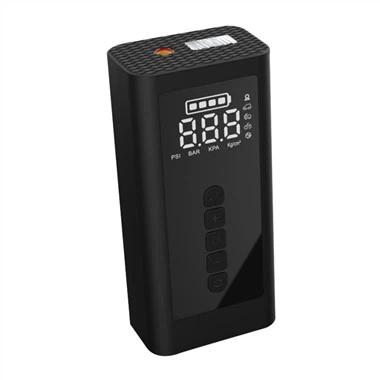
In the realm of automotive emergency solutions, jump starters have emerged as indispensable tools. As a supplier in this field, I’ve witnessed firsthand the evolution of jump starters, from their humble beginnings to the sophisticated and powerful units available today. One question that frequently arises from both consumers and industry insiders is how the jump – starting capacity of a jump starter changes with age. Jump Starter
The Basics of Jump Starter Capacity
Before delving into the impact of age on jump – starting capacity, it’s essential to understand what jump – starting capacity means. Jump – starting capacity is primarily determined by the amount of electrical energy a jump starter can deliver. This is typically measured in ampere – hours (Ah) or cranking amps (CA), cold – cranking amps (CCA). Ampere – hours give an indication of the total charge the battery in the jump starter can hold, while cranking amps and cold – cranking amps represent the current the jump starter can supply to start an engine, with cold – cranking amps specifically measured at 0°F (- 18°C) to simulate difficult starting conditions.
A high – capacity jump starter can provide more power, making it suitable for larger engines or in situations where the vehicle’s battery is severely depleted. For example, a heavy – duty truck with a large diesel engine would require a jump starter with a higher CCA rating to turn over the engine effectively compared to a compact car.
The Chemical Reactions Inside Jump Starter Batteries
Most jump starters on the market today use lithium – ion or lead – acid batteries. These batteries rely on chemical reactions to store and release electrical energy.
In a lithium – ion battery, lithium ions move from the negative electrode (anode) to the positive electrode (cathode) during discharge, and in the opposite direction during charging. Over time, repeated cycling of charge and discharge leads to a phenomenon known as "aging" or "battery degradation". The electrolyte in the battery can break down, and the electrodes can experience structural changes. These changes reduce the number of lithium ions available for the reaction, thereby decreasing the battery’s capacity to store and deliver energy.
Lead – acid batteries, on the other hand, are based on the reaction between lead, lead dioxide, and sulfuric acid. During discharge, lead and lead dioxide react with sulfuric acid to form lead sulfate and water. When charging, the process reverses. However, over time, lead sulfate can become hard and crystalline, a process called sulfation. Sulfation reduces the surface area of the electrodes available for the chemical reaction, leading to a decline in the battery’s ability to hold and deliver a charge.
Impact of Environmental Factors on Aging
The age – related decline in jump – starting capacity is not solely determined by the number of charge – discharge cycles. Environmental factors also play a crucial role.
Temperature: Extreme temperatures can significantly affect the performance and longevity of jump starter batteries. High temperatures accelerate the chemical reactions inside the battery, which can lead to faster degradation of the electrolyte and electrodes. For example, if a jump starter is left in a hot car trunk during the summer, the internal temperature can rise to levels that damage the battery over time. On the contrary, low temperatures reduce the battery’s ability to deliver power. In cold weather, the chemical reactions slow down, and the battery’s CCA rating drops, affecting its jump – starting capacity.
Humidity: High humidity can cause corrosion on the battery terminals and other metal components of the jump starter. Corrosion increases the resistance in the electrical circuit, reducing the efficiency of power transfer and potentially lowering the overall jump – starting capacity.
Real – World Observations of Capacity Degradation
In my experience as a jump starter supplier, we’ve conducted numerous tests on our products over time. When a typical lithium – ion jump starter is new, it can deliver close to its rated capacity. However, after about 500 – 1000 charge – discharge cycles, we’ve observed a capacity degradation of around 20% – 30%. This means that if a jump starter initially had a CCA rating of 800, after 500 – 1000 cycles, it might only be able to provide a CCA of around 560 – 640.
For lead – acid jump starters, the degradation rate is often more rapid. After just 200 – 300 charge – discharge cycles, we’ve seen a capacity loss of up to 40%. This is due in part to the sulfation process, which is more difficult to reverse compared to the degradation mechanisms in lithium – ion batteries.
Mitigating Capacity Loss
As a supplier, we’re constantly looking for ways to help our customers extend the lifespan and maintain the jump – starting capacity of our products.
Proper Charging: Following the manufacturer’s charging instructions is crucial. Overcharging or undercharging can accelerate battery degradation. For lithium – ion jump starters, it’s recommended to charge them regularly but avoid leaving them on the charger for extended periods after reaching full charge. For lead – acid batteries, using a smart charger that can prevent overcharging and detect when the battery is fully charged is essential.
Storage Conditions: When not in use, jump starters should be stored in a cool, dry place. If possible, store them at a partial charge rather than fully charged or fully discharged. This helps to slow down the chemical reactions inside the battery and reduces the likelihood of degradation.
The Importance of Monitoring Jump – Starting Capacity
Regularly monitoring the jump – starting capacity of a jump starter is essential for both safety and reliability. A jump starter with a significantly reduced capacity may not be able to start a vehicle when needed, leaving the user stranded.
There are several ways to monitor capacity. Some modern jump starters come with built – in indicators that show the remaining charge and capacity. For more accurate measurements, professional battery testers can be used. These testers can provide detailed information about the battery’s state of health, including its current capacity and whether it needs to be replaced.
Conclusion: A Call to Action
As a jump starter supplier, we’re committed to providing high – quality products that meet the needs of our customers. Understanding how the jump – starting capacity changes with age is crucial for both us and our customers. By being aware of the factors that affect capacity degradation and taking steps to mitigate them, our customers can ensure that their jump starters remain reliable for years to come.
Car Vacuum If you’re in the market for a new jump starter or are looking to upgrade your existing one, I encourage you to reach out. We offer a wide range of jump starters with different capacities and features to suit various needs. Whether you’re a professional mechanic, an automotive enthusiast, or simply want to be prepared for emergencies on the road, our team is ready to help you find the perfect jump starter solution. Contact us to start a procurement discussion and ensure you have a reliable jump starter at your disposal.
References
- Linden, D., & Reddy, T. B. (2002). Handbook of Batteries. McGraw – Hill.
- Broussely, M., et al. (2004). "LiPF6 salt solutions for lithium – ion batteries: Structural properties and thermal stability in EC/DMC solvents." Journal of Power Sources, 126(1 – 2), 84 – 97.
- Berndt, D. (2000). The Lead – Acid Battery: Science and Technology. Elsevier.
Ningbo Hope Auto Accessories Co., Ltd.
Ningbo Hope Auto Accessories Co., Ltd. is one of the leading jump starter manufacturers and suppliers in China. We warmly welcome you to buy or wholesale high quality jump starter at low price from our factory. Good service and punctual delivery are available.
Address: No.98 Hutang Qunli Village, Yuyao City, Zhejiang, China.
E-mail: Robin@top-hope.cn
WebSite: https://www.top-hope.com/
