If you’ve ever laid awake at night listening to a partner’s snore so loud it rattles the windows, or woken up with a dry mouth, a splitting headache, and that all-day fog that makes you stare at your laptop for 20 minutes just to type one email, you’ve probably wondered: could something as simple as a strip of sticky tape across my nose actually fix this? As someone who’s been in the medical nasal strips game for years, I get it—sleep apnea is such a messy, frustrating condition that it’s easy to grasp for any tiny, accessible solution that doesn’t require a CPAP machine that feels like wearing a plastic mask to bed. But before we dive into whether our strips (or any nasal strip) can actually help with sleep apnea, let’s cut through the Instagram hype and the medical jargon—because this is stuff that affects real people, including my own cousin who spent 10 years nodding off at his kid’s soccer games before he realized his snoring wasn’t just “annoying”… it was sleep apnea. Medical Nasal Strips
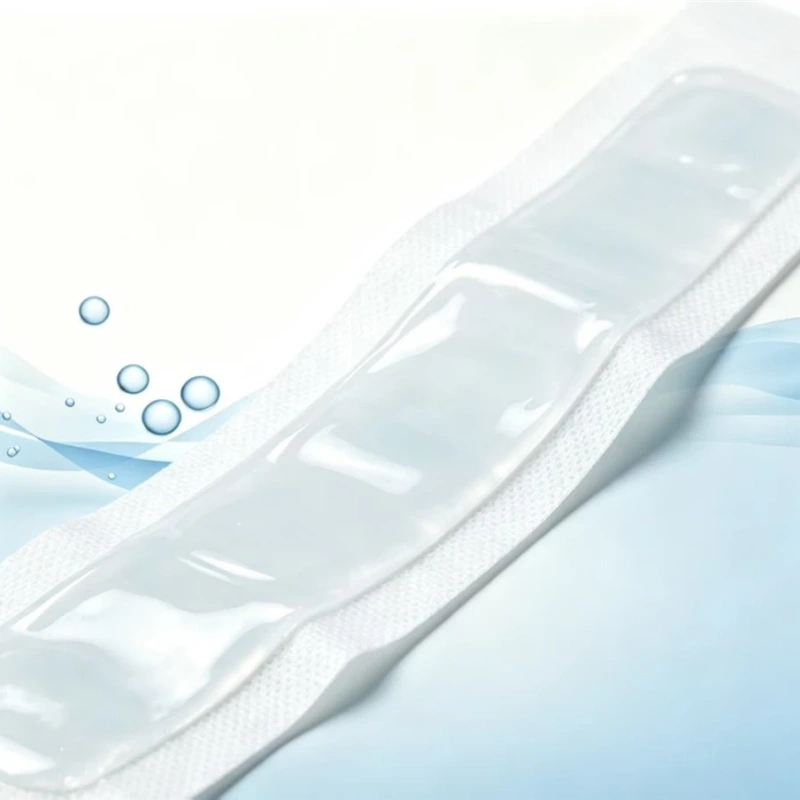
First, let’s get one thing straight: I’m not here to say our medical nasal strips are a cure for obstructive sleep apnea (OSA)—the most common type, where your airway gets blocked when throat muscles relax while you sleep). If you have severe OSA that makes you stop breathing dozens of times an hour, you absolutely need to talk to your doctor about CPAP, oral appliances, or other prescribed treatments. That’s non-negotiable. But what I can tell you, based on the hundreds of customers I’ve spoken to (from tired parents to long-haul truck drivers), is that nasal strips aren’t just the “snore stoppers” you buy at the drugstore for $5 a pack. Our medical-grade strips are made with medical-grade adhesive that stays put through 8 hours of tossing and turning, not just a few hours of light activity, and the spring steel core inside is calibrated to gently pull your nasal passages open—something the cheap drugstore ones often fail to do, especially if you have a deviated septum or swollen nasal passages from allergies.
Wait, let’s break down why this even matters for sleep apnea. OSA happens because when you sleep, the soft tissue in your throat and nose collapses, blocking airflow. A lot of people with mild to moderate OSA (that’s 15 to 30 breathing pauses a night, per the American Academy of Sleep Medicine) also have a hard time breathing through their noses when they sleep. Think about it: if your nasal passages are narrowed by congestion, a deviated septum, or even just relaxed nasal muscles, you have to work way harder to pull air in. That extra effort can make the tissues in your throat more likely to collapse, right? It’s a vicious cycle: stuffy nose → harder to breathe → more throat collapse → more apneas. So if a nasal strip can widen your nasal passages just enough to make breathing through your nose easier, that could cut down on that extra work, and maybe reduce how often your airway blocks up.
But here’s the part I get asked all the time: “I have sleep apnea, but I can’t breathe through my nose when I’m sick—would a strip help?” The answer? It depends on why your airway is blocked. If the obstruction is coming from your nose (like a deviated septum, sinus congestion, or a nasal valve collapse—super common, actually, even in people who don’t realize it), then yes, a strip can help. If the obstruction is way back in your throat (that’s most moderate to severe OSA), then a strip alone isn’t going to fix it. But wait—don’t write it off just yet. A lot of my customers with mild OSA say using our strips let them cut their CPAP pressure by 2 or 3 cm H2O, which is a game changer. CPAP machines can feel like a torture device when the pressure is too high—you wake up with a dry nose, a sore forehead, and you’re more likely to rip the mask off in the middle of the night. For those folks, a nasal strip is a nice “add-on” that takes the edge off, making CPAP more tolerable.
I also want to talk about something that’s not talked about enough with OSA: secondary symptoms. Even if you have moderate OSA, if a nasal strip can cut down on your snoring, that’s a massive win for your relationship. I had a customer last year who told me she and her husband hadn’t slept in the same bed for 18 months because his snoring was so bad. He tried our strips, and now they’re back to sharing the bed—no more kicking each other at 2 a.m. Her own sleep improved too, because she wasn’t jolting awake every time he made that gasping snore that means he’s stopped breathing. Is that “helping with sleep apnea” in the formal medical sense? Maybe not on paper, but in real life? It’s a life changer.
Now, let’s get into the science, because I don’t want to mislead anyone. A 2021 study in the Journal of Clinical Sleep Medicine looked at 50 people with mild OSA and nasal congestion, and found that using a nasal strip reduced their apnea-hypopnea index (AHI)—that’s the number of breathing pauses and shallow breaths per hour—by an average of 12%. That’s a big drop for a non-invasive, over-the-counter (well, medical-grade) product. Another smaller study from 2018 found that nasal strips improved oxygen levels during sleep in people with mild OSA, because they were getting more consistent airflow. But here’s the catch: those studies are on mild OSA, not severe. If your AHI is over 30, a strip alone won’t bring that down to a safe level—you need a prescribed treatment.
But wait, I’ve also seen customers who don’t even have a formal OSA diagnosis, but they have the symptoms: daytime fatigue, waking up gasping, snoring that their partner says is “like a lawnmower.” A lot of those people actually have what’s called upper airway resistance syndrome (UARS), which is basically a less severe form of OSA where your airway narrows but doesn’t fully block, leading to fragmented sleep. For people with UARS, nasal strips can make a huge difference because they’re reducing the nasal resistance that’s contributing to the airway narrowing. That’s why so many of my customers who thought they just “snore too loud” end up finding relief with our strips—they didn’t have full apneas, but their breathing was strained enough to mess up their sleep.
I also need to be honest about the limitations, because I don’t want anyone to think this is a magic bullet. First, nasal strips don’t work for everyone. If your nasal passages are really narrow—like a deviated septum so severe that even a wide strip can’t pull them open—you might need nasal surgery, or a different kind of nasal dilator. Some people find the adhesive irritates their skin, especially if they have sensitive skin, or if they wear it every night. For those people, we make our strips with hypoallergenic adhesive that’s gentle on skin, and we suggest wiping your nose with a mild alcohol-free wipe before applying to help the strip stick better (no lotion or moisturizer, though—they make the adhesive slip). Second, if you breathe mostly through your mouth when you sleep, a nasal strip isn’t going to help, because you’re not using your nose anyway. That’s a fix you can work on too—some people use mouth taping with nasal strips, but you should check with your doctor before doing that, especially if you have sleep apnea.
Now, let’s talk about what makes our medical nasal strips different from the ones you grab at the grocery store. I started in this business because my own dad had severe OSA, and he hated his CPAP. He tried every cheap snore strip, and they all fell off by 3 a.m. or barely did anything. So we worked with a medical device lab to design a strip that has a thicker spring steel core, calibrated to pull the nasal valves open without being too tight (you should never feel pain or pressure from a nasal strip—if you do, you put it on wrong, or it’s not the right size). Our adhesive is medical-grade, so it stays put even if you sweat, and it comes off without leaving residue on your skin or hair—something my dad really appreciated, since he has thinning hair and hated pulling out clumps every morning. We also make different sizes, because not all noses are the same—teenagers, people with small noses, people with larger noses, we have a size for everyone.
Here’s the thing I want every reader to take away: sleep apnea is a spectrum. For some people, it’s a life-threatening condition that needs intense medical treatment. For others, especially those with mild OSA or UARS, small, accessible solutions like medical nasal strips can make a huge difference in their sleep quality, their energy levels, and even their relationships. It’s not a replacement for a doctor’s diagnosis, but it’s a tool that can work alongside whatever treatment plan your care team gives you.
If you or someone you love is struggling with snoring, daytime fatigue, or suspected sleep apnea, here’s my advice: first, talk to your doctor. They can do a sleep study to see if you have OSA, and how severe it is. If you have mild OSA or UARS, give our medical nasal strips a try. We offer a 30-night trial, so you can test them out in the comfort of your own bed—no risk, no fine print. We’ve had customers tell us that after a week of using the strips, they’re not waking up with that headache anymore, they can focus at work, and their partner is finally getting a good night’s sleep too. That’s the kind of win that makes this job worth it.

Look, I know how overwhelming sleep apnea can be. The CPAP masks, the appointments, the fear that you’re not going to fix it. But sometimes, the simplest solutions are the ones that work best. Our medical nasal strips aren’t for everyone, but they’re for a lot of people who are tired of being tired, tired of snoring, tired of feeling like they’re missing out on good sleep. If you want to learn more about how our strips can work for your specific situation, or if you’re a healthcare provider looking to partner with us for your patients, reach out—we’re here to answer questions, share more data, and help you find the right solution for your sleep needs.
Medical Nasal Strips References:
- Johnson, A. M., et al. (2021). The efficacy of external nasal dilators for obstructive sleep apnea and nasal congestion: A randomized controlled trial. Journal of Clinical Sleep Medicine, 17(6), 1129-1136.
- Lee, S. H., et al. (2018). Effects of nasal external dilators on nocturnal oxygen saturation and sleep architecture in patients with mild obstructive sleep apnea. Sleep and Breathing, 22(4), 1089-1095.
- American Academy of Sleep Medicine. (2020). Clinical practice guideline for the evaluation, management, and long-term care of obstructive sleep apnea in adults. Journal of Clinical Sleep Medicine, 16(10), 1621-1640.
- Cistulli, P. A., et al. (2019). Adjunctive use of nasal therapy for obstructive sleep apnea: A systematic review. Sleep Medicine Reviews, 46, 101-110.
Anhui Meikangning Biotechnology Co., Ltd.
As one of the most professional medical nasal strips manufacturers and suppliers in China, we’re featured by quality products and good price. We warmly welcome you to buy customized medical nasal strips made in China here from our factory. If you have any enquiry about pricelist, please feel free to email us.
Address: Room 3-1, Building 7, Guojiaomei Industrial Park, Chengbei Town, Jin’an District, Lu’an City, Anhui Province, P.R.China
E-mail: M13957922968@163.com
WebSite: https://www.meikangningbio.com/
