Hey there, if you’re reading this, chances are you’re either troubleshooting a PVG conveyor belt that’s seen better days, or you’re trying to figure out how often to swap yours before it quits on you at the worst possible time. As someone who’s been selling PVG conveyor belts for over a decade now—first working in the warehouse at a local manufacturing plant, then moving to supply—let me tell you, this is the question I get asked more than “how’s the weather?” by new clients. The short answer is: it’s not one-size-fits-all. But if you stick around, I’ll break down exactly what determines that timeline, the red flags you shouldn’t ignore, and what we do to make sure your belts last as long as they’re supposed to. PVG Conveyor Belt

First off, let’s get one thing straight—PVG belts aren’t your average rubber conveyor. They’re those sturdy, fabric-reinforced ones, right? Used for heavy-duty stuff like mining, aggregate, bulk agriculture, maybe even recycling plants? They handle way more punishment than the thin belts you’d see at a grocery store checkout. So their lifespan depends way less on some arbitrary number and way more on how you’re actually using them.
Let’s start with the basics: what’s a normal expected lifespan for a PVG belt? If you’re a company that runs your operations 8 hours a day, 5 days a week, moving standard bulk material (like grain, low-density aggregate, or general manufacturing parts), you’re looking at 7 to 10 years. That’s the sweet spot we tell new clients. But wait—last year we had a coal mining client out in West Virginia who put a night shift on their belts, 12 hours a day, 7 days a week, moving really sharp, abrasive coal. Their belt only lasted 2 and a half years. Another client, a grain processing plant in Iowa, ran their belts 8 hours a day, 5 days a week, moving nothing but soft wheat. Their belt just hit 9 years and is still going strong. See? That’s the difference.
So why does use case matter so much? Let’s dive into the factors that actually shorten or extend a PVG belt’s life, because that’s where most people mess up.
First big one: material type. If you’re moving super abrasive stuff—like crushed rock, metal ore, recycled concrete—those materials are literally sanding down the belt’s top cover every single time it passes over the idlers. We use different cover compounds for that, right? If you get a standard abrasion-resistant cover, that’s built to take that wear, but even then, sharp edges will eat through it faster. On the flip side, if you’re moving sticky material (like wet clay or mud), that’s a different problem. It doesn’t abrade, but it builds up on the belt, gets into the gaps between the fabric plies, and causes something called “plying separation” over time. That’s when the fabric layers start peeling apart from each other, and once that happens, the belt is basically doomed to fail. We had a customer a couple years back who tried skimping on belt cleaners to save a few bucks, and within 18 months, their belt had plying separation so bad they had to replace the whole thing three months ahead of schedule. Total cost way more than those cleaners would’ve been.
Second factor: operating conditions. Temperature is huge. If you’re running belts in a cold climate—like a Canadian lumber yard where it’s -20F in winter—the fabric plies get brittle, and if you have a sharp impact from a falling log, the belt can crack. Conversely, if you’re in a desert or around hot machinery, like a steel plant where the ambient temp is 120F, the rubber cover breaks down, gets soft, and stretches way more than it should. Stretching is another big no-no—if the belt’s tension is off, it’s going to wear unevenly on the edges, or slip on the pulleys, leading to more friction and faster degradation. Also, environmental stuff like UV exposure? If you’re running your belt outdoors with no shelter, the sun will crack the rubber in a couple years, even if you’re not moving heavy stuff. We always recommend UV-resistant covers for outdoor applications, and we include that as a standard option now because we’ve seen too many people skip it and regret it.
Third factor: maintenance. This is the one that makes the biggest difference, hands down. I’ve seen two identical PVG belts installed in the same plant, same use case, one replaced every 6 years, the other still going at 11 years. The difference? Maintenance. What does good maintenance look like? First, regular inspections—we tell clients to do a quick walkaround every day, checking for cuts, tears, frayed edges, or that sticky buildup I mentioned earlier. Then, deep inspections every quarter, where you actually take a closer look at the plies, the splices (oh, splices are a whole other topic—bad splices are the #1 cause of unexpected belt failure), and the idlers to make sure they’re spinning properly. If an idler is stuck, it creates a flat spot on the belt, which wears that spot down super fast. Also, belt cleaners—primary and secondary, set correctly so they remove all material without scratching the belt. And lastly, cleaning the belt itself periodically, especially if you’re moving sticky material. A quick washdown once a week with a pressure washer (on a low setting, so you don’t damage the plies) can prevent that plying separation I talked about.
Wait, speaking of splices—if your belt has a bad splice, that’s a ticking time bomb. Splices are the weakest point of any conveyor belt, right? For PVG belts, we do hot-vulcanized splices, which are way stronger than mechanical ones, but only if they’re done right by a pro. Last year, a construction client had a splice done by a local crew that didn’t have experience with PVG belts, and within three months, the splice failed, shutting down their entire operation for 3 days. They spent more on emergency repairs and lost revenue than they would’ve paid to have one of our certified technicians do the splice properly. So when you’re getting splices done, make sure whoever’s doing it knows PVG belts, not just any conveyor belt.
Now, let’s talk about when you actually need to replace the belt, not just patch it. Patching works for small cuts or tears, but there’s a line. If you have a cut that’s more than 20% of the belt’s width, or a tear that goes through two or more plies, patching isn’t going to hold up to heavy loads. Or if you have widespread fraying along the edges, or that plying separation that we talked about—once you can see the fabric layers peeking through, that’s not repairable. Also, if the belt is stretching more than 2% of its total length, that’s a sign the plies are compromised, and it’s time for a swap. We usually advise clients to keep a close eye on those numbers during their inspections.
What about common misconceptions? I hear all the time, “My old belt lasted 15 years, so this new one should too.” No. Manufacturing standards change, but more importantly, your operating conditions probably changed. Maybe you started moving heavier material, or ran longer shifts, or stopped doing those weekly washdowns. Another one: “I’ll just patch it again.” If you’ve patched a belt three or four times, it’s not worth patching anymore—each patch weakens the surrounding area, and you’re just setting yourself up for a catastrophic failure down the line.
Let me throw in a real quick example from a client we had a few years back. They run a mine in Arizona, moving copper ore. They went with our standard abrasion-resistant PVG belt, installed it in 2018, and we did a quarterly maintenance check with them every time. Their shifts were 10 hours a day, 6 days a week, so pretty heavy use. They replaced the belt in 2021. Wait, that’s only 3 years. But when we looked at their maintenance logs, they were running an older model that didn’t have great belt cleaners, so they had a lot of material buildup, which led to minor plying separation. They fixed that by adding secondary cleaners, and when they replaced the belt in 2021, they upgraded to our thicker cover, and also added UV protection because they had some sections running outdoors. They told us the new belt, same use case, is already going strong in 2024—almost 3 years in, no issues. So fixing one small thing can extend the life a ton.
Another thing to consider: downtime. How much can your operation afford to be shut down? If you’re a mining company where every hour of downtime costs $10,000, you don’t want to wait until the belt breaks to replace it. That’s when proactive replacement is key. Our sales team always sits down with clients to map out their timeline, based on their use case and maintenance history, so we can schedule a replacement during a planned shutdown, not when the belt fails out of nowhere on a Saturday night. That saves you way more money than just waiting.
Now, if you’re at the point where you’re not sure if your belt needs replacing, or you’re trying to figure out how to set a timeline for a new PVG belt, what should you do? First, pull up your maintenance logs—look at how often you’ve had repairs, what kind of material you’re moving, how many hours your conveyor runs a week. If you don’t have good logs, that’s a great place to start—we actually help clients set up simple maintenance checklists if they don’t have one, because that makes all the difference long-term. If you’re still confused, reach out to us. We don’t just sell belts—we’ve got a team of techs who can come out (or do a virtual walkthrough if you’re not local) to assess your current belt, look at your operations, and give you a realistic timeline for replacement.
Wait, I should also mention that not all PVG belts are the same. We offer different ply ratings—like 2-ply, 3-ply, up to 6-ply for super heavy loads. If you’re using a 2-ply belt for stuff it’s not meant for, it’s going to wear out way faster. Matching the belt strength to your load is part of getting the timeline right, too. A lot of new clients come in thinking all PVG belts are the same, but that’s not the case. We help them pick the right rating, right cover, right add-ons (UV protection, static conductivity for plants that need it, etc.) based on their exact needs, which directly affects how long it lasts.
Let me wrap this up by saying there’s no magic number for how often to replace a PVG conveyor belt. It’s a mix of use, maintenance, environment, and the right product for your job. But if you do the basics—regular inspections, keep the belt clean, get splices done by pros, match your belt to your load—you can hit that 7-10 year mark, maybe even longer, instead of replacing it every 2 or 3 years unnecessarily.
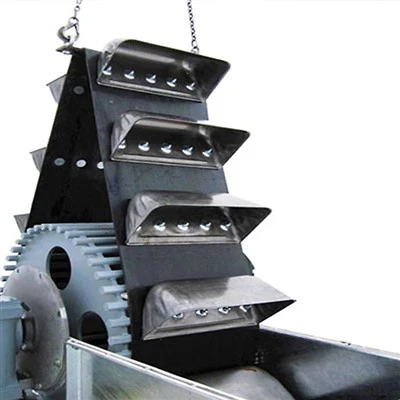
If you’re shopping for a new PVG belt, or you’re not sure if your current one is nearing the end, or you need help setting up a maintenance plan to get more life out of your existing belt, our team is here to help. We work with all kinds of industries, from small grain farms to large mining operations, so we’ve seen just about every scenario. No pushy sales stuff, no hidden fees—just straight answers based on what actually works. Reach out to us to chat through your needs, and we’ll help you get the right solution for your conveyor system.
PVG Conveyor Belt References:
- Conveyor Belt Manufacturers Association. (2022). PVG Conveyor Belt Lifespan Guide: Operating Conditions & Maintenance Best Practices.
- Mine Safety and Health Administration (MSHA). (2021). Heavy-Duty Conveyor Belt Performance: Abrasion Resistance and Durability Standards.
- Industrial Maintenance & Plant Operations (IMPO) Magazine. (2023). Proactive Conveyor Belt Replacement: Red Flags and Scheduling Strategies.
Alumina Technology (Qingdao) New Materials Co., Ltd.
As one of the most professional pvg conveyor belt manufacturers and suppliers in China, we also support customized service. With abundant experience, we warmly welcome you to buy pvg conveyor belt for sale here and get quotation from our factory. For price consultation, contact us.
Address: No.448, Jiangshan South Road, Huangdao District, Qingdao City, Shandong Province
E-mail: Gloria.zhang@contitech.cn
WebSite: https://www.altechconveyorbelt.com/
