If you’ve ever shopped for a three station thermoforming machine, you’ve probably stumbled across confusing posts online about “speed ranges” and wondered, “Wait, does this even matter?” Let me cut through the noise— I’m the guy who’s been supplying these machines for over a decade, and I get it: everyone wants a machine that’s fast enough to keep up with their production, but not so finicky that it breaks every other week. Today, we’re talking about the speed adjustment range for three station thermoforming machines, why it’s not just a number, and how to pick the sweet spot for your shop. Three Station Thermoforming Machine

First, let’s start with the basics— what even is a three station thermoforming machine, in plain terms? No jargon, promise. It’s a workhorse for making all sorts of plastic parts, from the disposable clamshells you get for takeout to blister packs for vitamins, even those little plastic trays for berries. The “three stations” are key here: station one clamps and heats the plastic sheet, station two forms the plastic into your desired shape (using pressure, vacuum, or sometimes both), and station three trims the part, stacks it, and ejects it. These stations rotate in a circle— that’s what makes it three station, vs. older single or two station models that had you manually move parts around.
Now, speed is tied directly to how fast that carousel (the rotating part holding the stations) spins. But here’s the thing: it’s not a one-size-fits-all number. I’ve had customers come in saying they “need a 60 cycle per minute machine” without telling me what they’re making, and half the time that’s overkill or way too slow. The actual adjustment range depends on two big factors: what kind of machine you buy (manual vs. semi-automatic vs. fully automatic) and the specs of the model line.
Let’s break down the most common models we supply, because that’s the stuff real shops actually use. Entry-level semi-automatic three station machines— perfect for small print shops, custom packaging makers, or startup operations— usually have a speed adjustment range that’s between 8 and 25 cycles per minute (CPM). Wait, cycles, not minutes, right? A cycle is one full rotation of the carousel, so each cycle makes one part (or multiple parts, if you run a larger sheet with multiple molds). That range is great for folks making small batches, custom parts, or materials that take longer to heat or form— like thicker PETG for reusable clamshells, instead of thin PP for disposable cups.
Then there’s the mid-range semi-automatic and fully automatic models, which are for medium to large production runs— think companies making 10,000 takeout containers a day, or blister packs for consumer goods. Those have a way wider adjustment range, usually from 5 CPM all the way up to 45 CPM. I know, that’s a huge gap— why so much? Because if you’re running a short-run custom order, you don’t want the machine zooming through cycles and messing up the mold alignment. But when you’re running a consistent 100,000 part batch of simple berry trays, you want it to zip along as fast as possible without defects.
Wait, but hold on— fully automatic can go even higher, right? We sell a high-output fully automatic three station machine for big packaging factories that tops out at 60 CPM. But that’s a specialized model, not something most small or even medium shops need. The key here is that the adjustment range isn’t just random numbers on a spec sheet— it’s built to match what the machine is designed to do.
Now, let’s get into the fine print that most sales guys won’t tell you. A lot of people see “up to 60 CPM” and assume that’s the speed they’ll get 100% of the time. That’s not true. The actual usable adjustment range is lower, depending on your material and part size. For example, if you’re forming a thick 8mm ABS sheet for a large industrial tray, you can’t spin the machine at 40 CPM— the plastic won’t heat evenly, the vacuum won’t have time to pull it into the mold, and you’ll get tons of warped parts. We tell all our customers that the sweet spot for most common applications is between 15 and 30 CPM, regardless of the machine’s top end. The range is there to tweak, not max out, every time.
Another big factor that affects the speed adjustment range: how precise the machine’s controls are. Entry-level models with basic mechanical controls (not digital) usually have a wider range but way less fine-tuning. Like, you can set it at 10 CPM or 15 CPM, but there’s no in-between. Our mid-range machines have digital variable speed drives that let you adjust speed in tiny increments— like 0.5 CPM changes— which is a game-changer. If your part has a little undercut that needs extra time to form, you can bump the speed down just 1 CPM instead of stopping the machine and resetting everything. That’s the difference between a machine that’s a hassle and one that pays for itself fast.
I’ve got a customer in Ohio who makes custom blister packs for small medical device companies. When he first started out, he bought an entry-level semi-automatic that only adjusted between 10 and 22 CPM. He was frustrated because he had one order for a 12-part blister pack that needed super precise forming, and that range didn’t give him enough control— he either had to rush and get defects or slow way down and lose time. Six months later, he upgraded to our mid-range model with a 5 to 45 CPM range, and now he can dial in exactly what he needs: 12 CPM for custom medical packs, 38 CPM for his standard bulk orders. That’s the value of a good adjustment range, not just a big number.
Wait, what about common myths? I hear all the time that “faster is always better.” No, that’s garbage. I had a guy call me last month saying his old machine was “only 20 CPM” and he needed a new one that did 50, because he thought he’d double his production. Turns out, he was making thin disposable takeout containers out of 0.2mm PP. We tested his old machine and found he was only running at 18 CPM because he didn’t know how to adjust the speed correctly for thin material. Once he tweaked it to 35 CPM, his defect rate dropped from 12% to 2%, and his production went up 70% without buying a new machine. The speed range is there to adjust to your material, not just to brag about.
Another thing that people miss: the speed adjustment range also ties into maintenance. If you’re running a machine at the top of its range 24/7, every day, the carousel, motors, and molds will wear out way faster. But if you use the lower end of the range for small jobs and the middle for bulk, your machine will last years longer. We recommend that our customers keep their average operating speed in the middle third of the adjustment range— that’s where the machine runs the most efficiently, with the least stress on parts.
Let’s talk about how to check a machine’s speed range when you’re shopping, because a lot of suppliers fudge numbers. When you’re talking to a vendor, don’t just ask “what’s the speed range?” Ask them for two numbers: the minimum adjustable speed (what’s the slowest it can go without stalling or messing up parts) and the maximum usable speed (not the top number they list, but what actual customers get with common materials). Also, ask if it’s a stepless adjustment or step-based. Stepless is way better for most shops, because you don’t have to settle for preset speeds.
I’ll be real with you— not every shop needs a huge speed adjustment range. If you’re a startup making small batches of custom parts, an entry-level machine with 8 to 25 CPM is all you need, and it’ll be cheaper too. But if you’re running mixed production— some custom orders, some big bulk runs— a wider range will save you so much time and hassle. The worst mistake you can make is buying a machine that’s either too slow (you can’t keep up with orders) or too fast (you get too many defects and waste material).
Let me wrap this up with what it all boils down to. The three station thermoforming machine’s speed adjustment range isn’t just a spec number to line a page. It’s a tool that lets you adapt to what you’re making, cut down on waste, and keep your production running smoothly. Entry-level models run around 8-25 CPM, mid-range semi-automatic/fully automatic run 5-45 CPM, and high-output fully automatic can go up to 60 CPM, but only for specific applications. The key is to match that range to your needs— not the other way around.
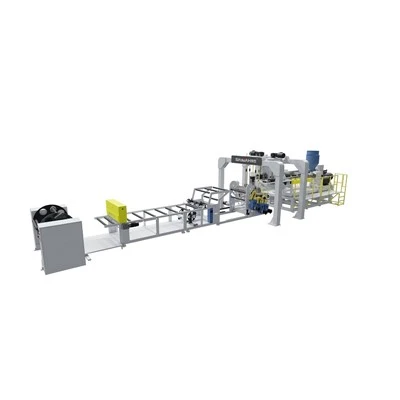
If you’re tired of dealing with a thermoforming machine that’s too finicky to use, or you want to upgrade to something that can handle all your different jobs, reach out to us. We don’t do generic one-size-fits-all machines, we’ll walk you through what speed range makes sense for your parts, your production volume, and your budget. We’ve helped everything from 2-man custom shops to big packaging factories get the right setup, and we’re here to do the same for you.
Plastic Cup Thermoforming Machine References
Modern Thermoforming: Process and Equipment Design, 2nd Edition
Plastics Packaging Technology, Society of Plastics Engineers
International Thermoforming Association: 2024 Production Equipment Specification Guide
Zhejiang Sayeah Machinery Co., Ltd.
Zhejiang Sayeah Machinery Co., Ltd. is one of the most reliable manufacturers and suppliers of three station thermoforming machine in China, also supports high quality customized service. Please feel free to buy CE approved three station thermoforming machine from our factory. For price consultation, contact us.
Address: Wanquan District Industrial Zone,West Of China National Highway 104, Sunlou Village, Wanquan Town, Pingyang County, Zhejiang Province. China
E-mail: sales@sayeahmachinery.com
WebSite: https://www.sayeahthermoforming.com/
