If you’ve ever asked our team here at [Your Company Name] how much electronic stamping parts cost, you know we never give a one-size-fits-all answer. And honestly? If anyone in this industry hits you with a flat rate, run—they’re either skipping the details that make these parts work, or lowballing you to win a quote and then nickel-and-diming you later. As an electronic stamping parts supplier who’s spent 12 years walking clients through every step of this process, I’ve seen too many small businesses and even large OEMs get burned by vague pricing. Today, I want to break down what actually goes into the cost, give you real-world ranges for common parts, and explain why your quote isn’t just a number on a page. Electronic Stamping Parts
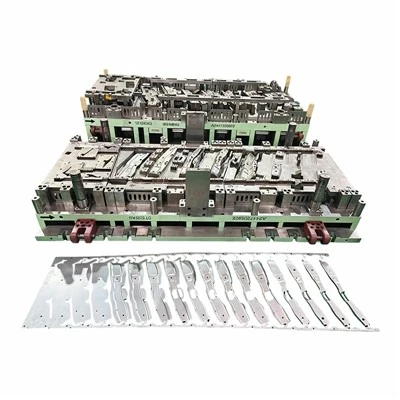
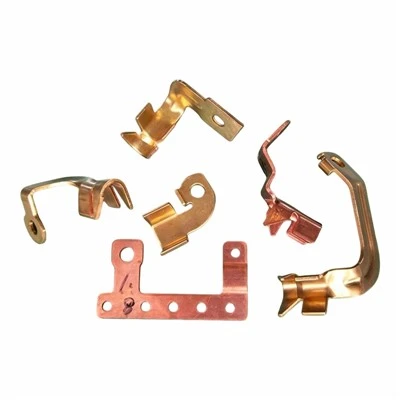
First, let’s ground this in what electronic stamping parts even are—just to make sure we’re on the same page. These are tiny, precision-cut metal components stamped from raw material using die and press technology, designed to fit into everything from smartphone battery contacts to automotive sensor brackets, medical device lead frames, and even the pins in your laptop’s USB port. They’re not the same as the generic metal brackets you’d pick up at a hardware store; these often have tolerances of 0.001 inches or less, meaning a tiny misalignment can make a part useless for its intended use. That precision is a huge driver of cost, and it’s why I can’t tell you “a connector pin costs $0.10” without knowing the full scope of your project.
Let’s start with the biggest cost levers, because these are the things we review first when someone reaches out for a quote. The first is raw material type. You’d be shocked how many clients forget this, but it’s 30-40% of the total cost for most low-volume runs. Electronic stamping parts use specialized metals, not just steel. The most common are:
- Carbon steel: The cheapest option, used for basic components where corrosion isn’t a concern, like small mounting brackets for low-stress electronics. It runs $1.50 to $3.00 per pound, so a part that uses 0.01 pounds of carbon steel would have a material cost of just $0.015 to $0.03.
- Brass: A go-to for electrical contacts because it’s highly conductive, malleable, and resistant to corrosion. It’s more expensive, at $3.00 to $6.00 per pound, so that same 0.01-pound brass contact would be $0.03 to $0.06 in material costs.
- Copper and copper alloys (like beryllium copper): Used for high-performance contacts, signal pins, and lead frames where conductivity and springiness are critical. Beryllium copper is especially prized for its durability in repeated connections, and it runs $8.00 to $15.00 per pound—so that tiny pin could jump to $0.08 to $0.15 in material costs alone.
- Stainless steel: Used for parts that need to withstand harsh environments, like automotive under-hood sensors or medical device components. It’s priced at $4.00 to $9.00 per pound, depending on the grade.
The second big cost driver is part complexity and design requirements. A simple, flat metal washer stamped from carbon steel will cost way less than a custom lead frame with 12 individual pins, each requiring a 90-degree bend and a gold-plated finish. Let’s break that down by volume, too, because stamping is a process where economies of scale hit hard. I’ve seen clients come in with a prototype order of 50 parts, a pilot run of 5,000, and a full production order of 500,000—each with wildly different pricing.
For prototype or low-volume runs (10 to 1,000 parts): This is where most startups or product design teams start. These runs don’t benefit from the full efficiency of high-volume stamping, and tooling costs are often spread over smaller quantities. A simple carbon steel mounting bracket might run $0.25 to $0.75 per part here, while a brass electrical contact with basic tolerances could be $0.50 to $1.50 per part. If you add secondary operations—like plating, heat treating, or laser welding—that adds $0.10 to $0.50 per operation, depending on the part. For example, a medical lead frame with precision etching and gold plating for biocompatibility could be $5.00 to $15.00 per part for a 500-part run. The downside here is tooling: the custom die you need to stamp your part can cost anywhere from $1,500 to $10,000, depending on complexity, for low-volume runs. We don’t make money on tooling for small runs, so we pass that cost on, but it’s necessary to get the exact part you need.
For mid-volume runs (1,000 to 50,000 parts): This is the sweet spot for many emerging brands. Tooling is already amortized over a larger number of parts, so per-part costs drop sharply. That same simple carbon steel mounting bracket might drop to $0.08 to $0.20 per part, while the brass electrical contact could be $0.15 to $0.40 per part. Add plating, and that becomes $0.25 to $0.70 per part. I had a client last year who was launching a line of wireless earbuds; their initial prototype run of 200 contacts cost $1.20 each, but when they scaled to 10,000 units, we got their per-part cost down to $0.28 each. That’s the power of volume, but only if your design is optimized for stamping.
For high-volume production runs (50,000+ parts, often millions): This is where stamping really shines, because the per-part tooling and setup costs are spread across such a large quantity. Per-part costs here are the lowest, but you have to be careful: if your design isn’t optimized for high-speed stamping, you might end up paying more per part than a mid-volume run, because we have to slow down our presses or add extra quality checks. For high-volume runs, a simple carbon steel bracket can be $0.01 to $0.05 per part, a brass contact can be $0.03 to $0.10 per part, and a precision lead frame with multiple secondary operations can be $0.50 to $2.00 per part. Last quarter, we fulfilled an order for automotive sensor brackets for a major manufacturer, with a total of 2.2 million parts. Their per-part cost was $0.04, including plating, which was way lower than their initial quote from another supplier. Why? Because their design was simplified to work with our high-speed progressive stamping dies, which cut production time drastically.
Another factor that almost no one talks about is quality and inspection requirements. Electronic parts can’t have burrs, misalignments, or surface defects that would cause a product failure, especially in medical or automotive applications. For aerospace or medical-grade parts, we have to implement 100% inspection of every part, not just sample checks. That adds 10-20% to the per-part cost, because our team has to sort every finished part and reject any that don’t meet IPC-A-610 or ISO 13485 standards. We had a client last year who tried to skip third-party inspection for a medical device part, and ended up with a batch of 20,000 parts that had tiny burrs that would have caused their device to fail. We had to scrap the entire batch at our cost, but we also had to adjust our pricing for their next order because of the extra quality controls they required.
Wait, let’s talk about common misconceptions. A lot of people think “cheaper metal equals cheaper part,” but that’s not always true. For example, beryllium copper is more expensive per pound than brass, but because it’s more durable and can be stamped to tighter tolerances, you might need less material to get the same performance. Also, if you choose a lower-quality die for a prototype, it might break mid-run, leading to extra costs to retool and delay your project. I always tell clients: the cheapest quote isn’t the best, especially for electronic stamping parts. A $0.10 part that fails 5% of the time is way more expensive than a $0.15 part that has a 0.1% failure rate, because you’ll have to replace the failed parts, deal with returns, and damage your brand reputation.
So, what does this all mean for you? If you’re reading this and you have a project in mind, here’s what you need to have ready to get an accurate quote:
- Exact part drawings, including tolerances, dimensions, and any secondary operations (plating, bending, etching, etc.)
- Total required volume, broken down by phase (prototyping, pilot, full production)
- Application and industry (automotive, medical, consumer electronics, etc.) because that dictates quality standards
- Any timeline requirements, because rush jobs add 20-50% to costs, especially for tooling.
I’ve been in this industry long enough to know that pricing isn’t just a number—it’s a reflection of the work, materials, and quality that goes into the parts you’re using in your products. We don’t cut corners here; every part we stamp is tested twice, and we stand behind our work. If you’re looking for electronic stamping parts, whether it’s a prototype run or a million-part production order, we can walk you through every detail of the quote, no hidden fees, no fine print. The best way to get a real idea of what your parts will cost is to reach out with your project details, and our team will give you a transparent, detailed breakdown of costs, timelines, and quality standards. We’re here to help you get the right parts for your project, at a fair price.
Transfer Dies & Tandem Dies References:
- "Metal Stamping Cost Analysis: A Guide for Designers", Precision Metalforming Association, 2022
- "Electronic Stamping Materials and Applications", IPC Association Connecting Electronics Industries, 2021
- "Quality Standards for Metal Stamped Components in Medical Devices", ISO 13485:2016, 2020
- "Economies of Scale in Stamping Production", Stamping Journal, Volume 58, Issue 3, 2023
Dongguan Changdong Tool & Die Co., Ltd.
With abundant experience, we are one of the most reliable electronic stamping parts manufacturers and suppliers in China. Please feel free to buy advanced electronic stamping parts made in China here from our factory. Good service and quality products are available.
Address: No. 56-B, Fumin South Road, Dalang Town, Dongguan City, Guangdong Province, China
E-mail: sales@stamping-die.com
WebSite: https://www.metalstampingdie.com/
