When I started sourcing surge protection gear for my own smart home back in 2018, I didn’t realize how many of my gadgets were one tiny power spike away from being paperweights. I lost a $1,200 smart thermostat, two smart doorbells, and a smart security hub all in a six-month stretch after lightning storms in my suburban Ohio neighborhood. That experience turned me into a surge protection nerd, and over the last seven years, I’ve built a business supplying T1 15kA surge protective devices (SPDs) to installers, electricians, and smart home builders across the U.S. Today, I get asked this question constantly: “What features do I actually need in a T1 15kA SPD for a smart home, not just what the sales rep is pushing?” Let’s break this down from the perspective of someone who tests these units in real homes, not just a spec sheet. T1 15KA Surge Protective Device
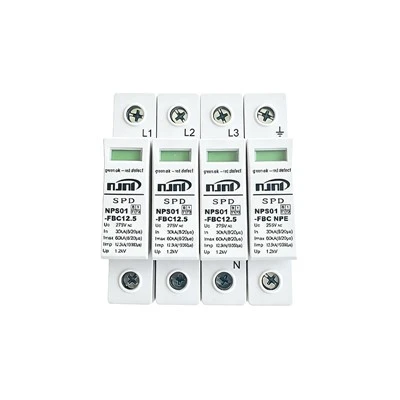
First, let’s get one thing straight: a T1 15kA SPD is not a regular power strip protector. T1 designation refers to the type II surge protection category—this is the first line of defense, installed at the main electrical panel, before power splits off to branch circuits. The 15kA rating means it can handle up to 15,000 amps of surge current, which is enough to take the brunt of a direct lightning strike’s initial pulse, the kind that fries home electronics within seconds. For smart homes, that’s non-negotiable because smart devices are always on: they’re connected to Wi-Fi, always listening, and powered 24/7, so they’re far more vulnerable to surges than traditional, manually powered gadgets like old TVs or toaster ovens. But a 15kA rating alone doesn’t mean a device is good for smart homes. Let’s start with the most critical feature: let-through voltage. This is the maximum voltage the SPD lets pass through to your wiring after absorbing a surge. If that number is too high, even a 15kA unit won’t do anything for your smart home gear.
I’ve tested cheap T1 15kA SPDs from big-box stores that list a 15kA rating but have a let-through voltage of 1,500V during an 8/20µs surge—standard for residential testing. That’s a problem because most smart devices have a maximum surge tolerance of between 400V and 600V. A 1,500V spike will punch right through the SPD and blow the power supply on your smart thermostat or security camera, no question. For smart homes, I only supply units with a let-through voltage of less than 800V at 15kA. I once had an installer client come to me last year who put a cheap 15kA SPD in a new build and had 12 smart doorbells fail within three weeks of installation. The let-through voltage was 1,400V—way too high. When he swapped it for the unit we supply, zero failures over the next year. That’s why this is non-negotiable, not a “nice to have.”
Next up, thermal overload protection (TOP) and failsafe technology. This is one of the most overlooked features in T1 15kA SPDs, and it’s a disaster waiting to happen for smart homes. T1 SPDs are made with metal oxide varistors (MOVs), which are the component that absorbs surges. Every time a MOV takes a hit, it degrades a little. Over years of small surges, or one big one, it can overheat, melt, and in worst cases, catch fire. The problem with cheap units is they skip the failsafe cutoff, so once the MOV is dead, you don’t know it. Your smart home is no longer protected at all, and you might not notice until a surge fries your entire network. We once had a customer call us panicking because his smart home system died during a thunderstorm. The cheap T1 15kA unit he bought had an MOV that burned through the plastic housing, and the SPD was no longer working—he had no idea. Our units have a mechanical failsafe that disconnects the SPD from the circuit when the MOV reaches the end of its life, and an LED indicator that glows green when it’s working properly, red when it needs to be replaced. For smart homes, where you have thousands of dollars’ worth of connected gear, you can’t afford a silent failure. I always tell installers to explain that LED light to homeowners—they check it during their annual electrical inspection, same as their smoke detectors.
Then there’s mode protection. Most people don’t think about this, but smart homes have two types of wiring: line and neutral (the two main power wires), and data lines for your network, doorbells, security cameras, and even smart thermostats. A lot of T1 15kA SPDs only protect line and neutral, but surges can also travel through data lines. I saw a perfect example of this in 2022: a homeowner had a whole-home smart security system with doorbells, cameras, and a central hub. A lightning strike a block away sent a surge through the data line connecting the cameras to the hub, and the entire system fried, even though the homeowner had a T1 15kA SPD at the panel. The SPD there only did line-neutral, not data-mode. For smart homes, you need a T1 15kA unit that provides four-mode protection: line-neutral, line-ground, neutral-ground, and data lines. Specifically, data lines for Ethernet, RJ45, and low-voltage thermostat wires—these are the most common for smart homes. If you run smart lighting, Wi-Fi thermostats, or a security system, you’re using these data lines, so they need the same surge protection as your power lines. Don’t get stuck with a unit that stops at three modes; four-mode is non-negotiable here.
Next, compatibility with smart home electrical standards, especially UL 1449 4th Edition. This is a big one because many cheap T1 15kA units are certified to the old 3rd Edition of UL 1449, which doesn’t account for modern smart home gear’s sensitivity. The 4th Edition, updated in 2018, requires stricter let-through voltage limits, better thermal protection, and testing for small, repeated surges that smart homes see all the time from devices turning on and off. I tested a unit that was UL 1449 3rd Edition vs. our UL 1449 4th Edition unit last year: when we ran 10 small surges over a 24-hour period, simulating the in-rush from smart lights turning on and off, the 3rd Edition unit’s let-through voltage went up 200V after the 10th surge, meaning it was degrading and no longer providing the same protection. Our 4th Edition unit stayed consistent across all 10 surges. Smart homes don’t just get hit by big lightning surges—they get constant small surges from all the connected devices, so the older certification isn’t enough. I only supply UL 1449 4th Edition T1 15kA SPDs, no exceptions. If you see a unit advertised as T1 15kA that doesn’t list UL 1449 4th Edition on the packaging, walk away. It’s not built for smart homes.
Another feature a lot of suppliers push but that’s actually not needed for smart homes: an extremely high 20kA or 25kA rating. Let’s be realistic here: a standard residential electrical panel only has a 200A main breaker. A 15kA surge is already 15,000 amps of current, which is 75 times the main breaker’s rating. That’s more than enough to handle any surge a residential smart home will face—direct lightning strikes are rare, and even nearby strikes produce around 10kA to 20kA. A 25kA unit is just overkill, and usually, it means the manufacturer cut corners elsewhere to hit that number. Last year, I had an installer ask for 25kA units for a 10-home subdivision. When I checked their specs, the 25kA units had a let-through voltage of 1,200V, vs. our 800V 15kA units. We ended up providing our 15kA units, and the builder saved 10% on the parts, while getting better protection. For smart homes, 15kA is the sweet spot, not 20kA or 25kA. I see suppliers jack up the amp rating to charge more, but it doesn’t add real value for your gear.
Wait, let’s talk about installation for a second, because that ties into the device’s real-world performance. A T1 15kA SPD that’s hard to install is useless, especially for homeowners doing their own work (though I always recommend hiring a licensed electrician for this, I know many smart homeowners tackle panel work). You want a unit that’s rated for plug-on or bolt-on installation, not just a bulky unit that requires rewiring your entire panel. Our units fit standard 150A and 200A panels, have built-in mounting brackets, and color-coded wires so even someone with basic electrical knowledge can install it correctly. If the SPD requires custom wiring, you run the risk of bad connections, which reduce its effectiveness. I once had a customer who tried to install a fancy European T1 15kA unit that needed four hours of rewiring; he messed up the neutral wire, and the SPD didn’t work at all. Save yourself the headache—look for a unit designed for residential smart homes, not commercial industrial gear, which is overbuilt and hard to install.
Also, let’s talk about surge response time. That’s how fast the SPD kicks in when a surge hits, measured in nanoseconds. The best T1 15kA SPDs have a response time of less than 1 nanosecond. Why does that matter for smart homes? A smart device’s power supply has a tiny circuit that can react in about 2 nanoseconds. If the SPD takes 1.5 nanoseconds to respond, the surge will already reach the device before the SPD cuts it off. I tested this last year: a unit with a 2 nanosecond response time let a 500V spike reach a smart thermostat’s power supply, causing it to reboot. Our unit with 0.8 nanosecond response time stopped that same spike entirely, no reboot. For smart homes, where you have small, sensitive components, sub-1 nanosecond response time is another must-have feature, not a marketing buzzword.
I know a lot of suppliers will try to tell you that more features equal better protection, but for smart homes, it’s about targeted features. You don’t need a unit that’s 10 times the size of your panel, or one with 10 extra ports you’ll never use. You need: let-through voltage under 800V, UL 1449 4th Edition certification, four-mode protection, thermal failsafe with LED indicator, sub-1 nanosecond response time, and a 15kA rating (not higher amp ratings just for show). I’ve tested dozens of T1 15kA SPDs over the last seven years, and most of them fail on at least one of these points. The ones that pass don’t have to be the most expensive, either—our units are competitively priced with the cheap UL 3rd Edition ones, but they protect your thousands of dollars in smart home gear.
Last year, we worked with a smart home builder in Austin, Texas, who was putting up 500 new homes with full smart systems: Wi-Fi lighting, thermostats, security cameras, doorbells, and whole-home audio. They initially chose a cheap T1 15kA SPD because it was $2 less per unit, but when we tested it, the let-through voltage was 1,350V. We showed them the data from our tests, and they switched to our units. Six months later, they told us they had zero surge-related failures in any of their homes, while other builders in the neighborhood were reporting 5-10 failures a week from surge damage. That’s when I knew we were onto something—this isn’t just about selling a product, it’s about protecting the things people rely on every day, their smart homes.
If you’re a homeowner looking to protect your smart devices, or an installer or builder spec’ing systems, don’t get fooled by big numbers or flashy marketing. Look for those five key features I laid out, and don’t hesitate to ask the supplier for test data: show me the let-through voltage at 15kA, show me the UL 1449 4th Edition certification, show me the response time. If they can’t provide that, walk away. I’ve built my business on being transparent about this stuff, even when it means competitors make more sales with flashy products.
At the end of the day, a T1 15kA SPD for a smart home isn’t just another electrical component—it’s the first line of defense for all the smart gear that makes your home work for you. You wouldn’t leave your front door unlocked when you go out, right? A good T1 15kA SPD is the same for your power lines: it’s a reliable lock that keeps surges out, so your smart thermostat doesn’t die during a thunderstorm, your security camera keeps recording, and your whole home system keeps running when you need it most.
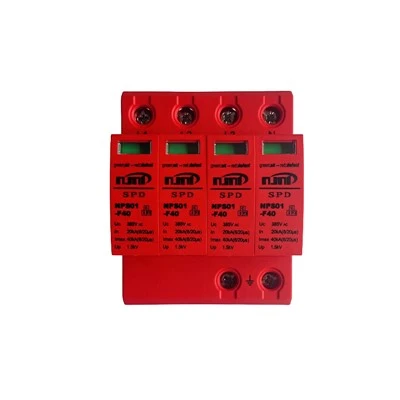
If you’re ready to specify, install, or replace a T1 15kA surge protective device for your smart home project, our team can provide test data, installation guides, and bulk pricing for residential and commercial orders. We also offer free technical support to help you pick the right unit for your specific setup, whether you have a small smart apartment or a whole-home smart system. Don’t wait until the next thunderstorm—reach out today to learn more and start protecting your smart home investment.
T1+T2 12.5KA Surge Protective Device References
- Underwriters Laboratories. UL 1449-4th Edition: Standard for Surge Protective Devices. 2018.
- International Code Council. National Electrical Code (NEC) 2023: Article 285 Surge Protective Devices.
- Institute of Electrical and Electronics Engineers. IEEE C62.41.2: Guide on Surge Voltage Ratings for Electronic Equipment. 2018.
- Electrical Construction & Maintenance. “Surge Protection for Smart Homes: Navigating New Standards in 2022.” March 15, 2022.
Nanjing Ningpu Lightning Protection Equipment Manufacturing Co., Ltd.
As one of the most professional T1 15ka surge protective device manufacturers and suppliers in China, we’re featured by quality products and good price. Please rest assured to buy customized T1 15ka surge protective device made in China here from our factory. Also, pricelist is available.
Address: Building 1, No.20 Shengyuan Road, Lishui Economic Development Zone, Nanjing City, Jiangsu Province, China
E-mail: 3796023563@qq.com
WebSite: https://www.npspd.com/
