What’s up everyone, and welcome to my corner of the grid—where I get to geek out over how we keep the lights (and the lines of production) running for businesses that don’t have time to play energy catch-up. I’m not some corporate suit in a boardroom; I’m the lead tech guy at a C&I ESS platform—short for Commercial & Industrial Energy Storage Systems—so I spend most of my days on site, troubleshooting with plant managers, testing new setups, and explaining to folks who’ve never touched a battery bank why their whole operation doesn’t have to crash when the grid dips. If you’re an industrial operator, you’ve probably dealt with this before: your stamping line goes down for two seconds because of a grid blip, and you lose thousands in scrap or missed shifts. Or your warehouse’s HVAC guzzles power at the same time your production line is cranking, and you get slapped with a huge demand charge. That’s where we come in—and today I’m breaking down how we actually balance energy for different industrial processes, no boring textbook jargon, just real-world stuff that works. Commercial & Industrial ESS Platforms
First off, let’s get one thing straight: C&I energy balancing isn’t just “storing batteries and plugging things in.” If that was all, anyone could do it, and we wouldn’t be in business. Industrial processes are weirdly specific. A food and beverage plant has four or five big loads: the pasteurizer that needs constant, precise power (no fluctuations here—if that temp shifts even a little, you’re throwing out a whole batch of milk or soda), the packaging line that runs fast but can pause for a minute without issues, the refrigeration units that run 24/7 but don’t need perfect voltage every second, and the office lights and admin systems that are low-stakes most of the day. A metal stamping shop? They have huge press machines that draw massive power in short bursts (we call those “peaking loads”) and exhaust fans that run steady but can scale back if needed. A big pharmaceutical plant? Their cooling for bioreactors is non-negotiable—shut that off for even a few minutes, and you’re looking at a destroyed batch of drugs that cost millions. Balancing energy for all these isn’t one-size-fits-all; it’s like building a custom playlist for a workout, but the music is power, and skipping a track costs you way more than a missed verse.
So how do we do it? Let’s start with the brain of the whole operation: our custom energy management software (we call it EMS, but I’ll explain what it actually does in plain talk, not the acronym soup vendors love to throw at you). This isn’t some off-the-shelf tool you download and plug in. We sit down with the client for at least a week (sometimes two) to audit every single load in their facility. We hook up temporary meters to each machine, track their power draw minute by minute for days, even look at their past utility bills to see when those surprise demand charges hit. Last month, we worked with a snack factory that had no idea their fryer was drawing 120kW every single time it cycled on, and that their packaging line was only running at 60% during mid-morning because they’d overstaffed that shift. The EMS doesn’t just track this—it learns it. After a week, it knows exactly when the fryer will kick on, when the packaging line will slow for breaks, when the HVAC will spike at 2pm when the warehouse is full of hot boxes. That’s the first piece: knowing what’s coming, not just reacting to what’s here.
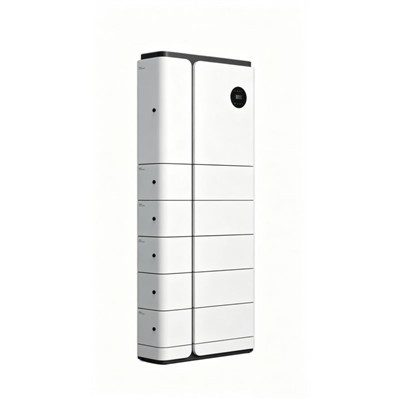
Once the EMS has the lay of the land, it’s time to actually shift power around, and that’s where our modular ESS hardware comes in. Wait—modular is key here. We don’t install a single huge battery bank that can power the whole building; we set up smaller, distributed battery units strategically placed near the heaviest loads. For that food plant’s pasteurizer, we put a dedicated 50kWh battery right next to the line. For the stamping shop’s press units, we have a bank of 200kWh batteries along the press bay. Why? Because sending power 100 feet across a plant line loses 5-10% of it as heat. If you have a heavy load right next to its battery, you don’t waste that energy. We also size the batteries based on how the process uses power. That pasteurizer needs 30 minutes of backup if the grid drops, so we size that battery to run exactly that, plus a 10% buffer for small fluctuations. The stamping press only needs 10 seconds of extra power to avoid a dip when the grid can’t keep up, so its battery is smaller, faster-charging, and built for short, high-power bursts—like a sports car battery vs. a truck battery, to use a car analogy most folks get.
Now, the actual balancing act: here’s where the magic happens. The EMS is constantly talking to every battery, every load, and the grid—literally a thousand times a second. Let’s walk through a real example from last week, when we were on site with a automotive parts manufacturer in Detroit. Their grid was showing a 5% voltage dip, which meant their press line was about to get a power drop big enough to cause a mis-stamp (which would ruin a $200 metal part, and they stamp 10,000 of those a day). The EMS noticed the press line was running slow that particular shift—they only had two operators instead of three, so the presses were cycling every 15 seconds instead of 10. It also saw their warehouse HVAC was running at 80% capacity, which they’d cranked up because it was a hot day, and that their office lights were at 70% (no one works in the office on weekends, but this was a Saturday shift for the plant).
Here’s what it did in half a second: first, it pulled 20kW from the small buffer battery next to the press line to cover the dip, so the stamp didn’t mis-fire. Then, it told the HVAC system it could scale back to 65% for the next 10 minutes—since the ambient temp wasn’t spiking, the warehouse would stay fine, and that freed up 15kW it would have used. Next, it cut the office lights to 50% (only keeping the hallway and server room lights on) which freed up another 5kW. That extra 20kW from the HVAC and office covered the press load, and it also put 10kW back into the main ESS bank for later when the solar panels on the roof (which we also integrate, by the way) were generating extra power at noon. And none of the processes noticed—no one saw the lights dim, no one felt the warehouse get warmer, the press line never skipped a beat. That’s balancing energy: not just taking from storage and giving to loads, but shifting non-critical loads around to cover the critical ones, without anyone even noticing.
Wait, but what about when there’s no solar, or the grid is super expensive? A lot of industrial facilities are on time-of-use utility plans, right? Power is way cheaper at night, more expensive during the day. The EMS uses that too. At that same Detroit plant, the ESS charges up at night when power is 4 cents per kWh, instead of drawing from the grid during the day when it’s 12 cents per kWh. But it doesn’t just charge all night—if the plant has a scheduled maintenance shift on Tuesday at 2am, it only charges enough to cover the loads during that maintenance, not the whole night. It also balances between different processes’ needs over days, not just minutes. For example, a paper mill we work with has a big drying line that uses way more power on Mondays when they process raw pulp, and less on Fridays when they’re finishing rolls for shipping. The EMS will adjust how much energy it stores from the weekend’s cheap grid power, and how much it pulls from ESS vs. grid, to make sure the drying line has enough power on Monday without wasting energy on Friday when they don’t need it.
I get it—some folks reading this might be thinking, “What if I’m not a huge plant with 100 machines? I run a small metal fab shop or a 50,000 sq ft warehouse. Does this even apply to me?” The short answer is yes, but we size the platform to match. For small C&I clients, we use our modular plug-and-play units—no big construction, no custom wiring, we can install a 50kWh or 100kWh unit in a day, and the EMS is set up to track your specific loads. A small warehouse, for example, might have a loading dock that uses a lot of power during early morning deliveries, and the rest of the facility runs slow. The EMS will store power overnight when it’s cheap, then send extra to the loading dock during the busiest time, instead of drawing power that would trigger a demand charge for the whole building. We also work with clients that have their own on-site generators, which are usually used as a backup. The EMS balances between the ESS and the generator too—if a grid dip is coming, it uses the ESS first (since it’s faster and more efficient) and only fires up the generator if the dip is longer than 5 minutes, so you don’t waste fuel running it for short blips.
One thing I always make sure clients understand: balancing energy isn’t about making processes work harder. It’s about making them work smarter, and protecting their bottom line. Last year, we had a semiconductor client who almost lost a $2M batch of wafers because of a 3-second grid flicker. Before we installed our ESS, that would have been a total loss. Now, the EMS sees grid dips 2 seconds before they hit (we sync with utility grid data and local sensors) and pulls just enough power from the ESS to keep the fab’s clean rooms and production tools running without interruption. They saved over $120k in that first quarter from avoided losses and lower demand charges. That’s not just tech talk—that’s real money in their bank.
I know a lot of industrial operators are wary of new energy stuff, especially with all the “greenwashing” out there from companies that overpromise and underdeliver. We’re not that company. Every client we work with gets a site-specific audit, a clear breakdown of how much we’ll save them, and we don’t lock them into long contracts with fine print. We also offer 24/7 support—if your plant has a shift running at 10pm, our team is on call to help the EMS adjust if something unexpected comes up, like a broken pump or a last-minute rush order that cranks an extra load.
So if you’re tired of dealing with unexpected grid costs, missed production time, or batches going bad because of power issues, I’d love to chat. We don’t do one-size-fits-all solutions, we build something exactly for your processes, your schedule, and your budget. If you want to see how our ESS platform can balance energy for your industrial operations, just reach out to our team for a no-obligation site walkthrough. We’ll come to your facility, look at your setup, and walk you through exactly how we’d balance your energy, no confusing terms, no sales pitches that skip over the fine print.
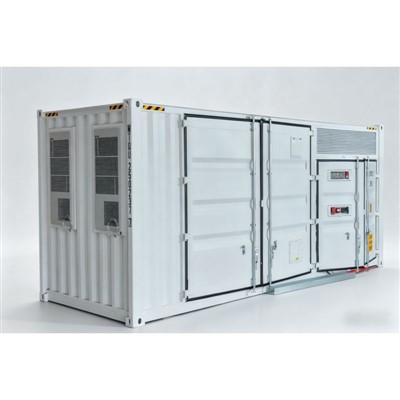
At the end of the day, that’s what we’re here for: we get that your job is to keep production running, to meet deadlines, and to keep your business profitable. Balancing energy isn’t just our specialty—it’s how we help you do your job better. Whether you’re a small fab shop or a large manufacturing plant, the right C&I ESS platform can take the stress out of power management, so you can focus on what you do best.
Solar Connector References
- International Energy Agency. (2022). “Global EV Outlook 2022: Securing Critical Materials for EV Batteries and Minerals. https://www.iea.org/reports/global-ev-outlook-2022"
- U.S. Energy Information Administration. (2023). “Commercial and Industrial Energy Storage Trends and Market Opportunities. https://www.eia.gov/analysis/studies/buildings/commercial/storage/"
- National Renewable Energy Laboratory. (2021). “Modular Energy Storage Systems for Grid Balancing in Commercial and Industrial Applications. https://www.nrel.gov/docs/fy21osti/79085.pdf"
- Electric Power Research Institute. (2022). “Demand Charge Reduction Strategies for Industrial Facilities Using Energy Storage and Demand Response. https://www.epri.com/research/products/00000000000020000003"
- International Electrotechnical Commission. (2020). “Standard for Energy Management Systems for Industrial Applications (IEC 61850-7-420). https://www.iec.ch/standardization/standards/IEC%2061850-7-420"
Tianjin Xilingke New Energy Technology Co., Ltd.
Address: Suite 2601, Tower B, Wanghai International, Haihe East Road, Hebei District, Tianjin, China.
E-mail: robin@sinelinkev.com
WebSite: https://www.sinelinkenergy.com/
