Hey there! If you’re in the industrial game—whether you handle oil and gas, water treatment, mining slurry, or chemical processing—you’ve definitely crossed paths with flanged gate valves. As someone who’s spent the last 8 years supplying these things (and fixing way too many that got worn out early), I’ve seen first-hand how erosion can turn a reliable workhorse into a costly headache fast. Let’s break down what erosion actually does to a flanged gate valve, why it happens way more than you’d expect, and what you can do to avoid it (or make sure your valve is built to handle the abuse). Flanged Gate Valve

First, let’s get one thing straight: erosion isn’t just “wear and tear.” It’s a specific, physical process where moving particles (or even harsh fluids) scrape, knock, or chip away at metal surfaces over time. Gate valves are supposed to be all-or-nothing—full open, full closed—no throttling, right? That’s why people love them for isolation; they don’t cause pressure drop like globe valves do. But that simple design is also their kryptonite when erosion hits.
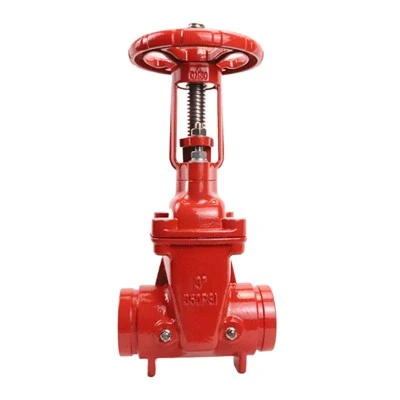
Let’s start with the parts of a flanged gate valve that are most at risk, because not every part erodes the same. The big ones: the gate itself, the seat rings, and the stem (wait, yeah, the stem too—don’t sleep on that). When a gate valve is partially open (even if you’re not supposed to throttle it), that’s where the trouble starts. If you leave it cracked open by accident, or have to use it for flow control for a bit because another valve broke, you create a narrow gap between the gate and the seat. That’s where all the fast-moving fluid (carrying sand, silt, metal shavings, or even tiny hard chemical crystals) gets squeezed through. Like when you put your thumb over a garden hose—speed spikes, and those particles go zooming at the metal surfaces.
The gate is the main player here. It’s a flat, usually metal disc that slides between two seats to block flow. When the gate is moving (even a tiny bit in a partially open position), the hard particles in the fluid act like tiny sandpaper, grinding away at the gate’s edge and the face that presses against the seat. I’ve seen gates where the leading edge got worn down by a millimeter in 6 months in a mining slurry application—by then, the valve wouldn’t fully close, so you had flow leaking past, and you had to shut down the whole line to replace it. That’s not just a part cost; that’s downtime costing tens of thousands of dollars an hour.
Then there are the seat rings. Flanged gate valve seats are either integral (part of the valve body) or replaceable, and guess which ones erode faster? Wait, no—actually, both, but replaceable seats are a band-aid if you don’t get the right material. The seat is where the gate seals, so when the high-velocity fluid with particles blasts through the gap, it hits the seat face dead on. I worked with a municipal water treatment plant last year that had standard carbon steel gate valves. Their seats were getting gouged by iron oxide particles in the water every 10 months. They switched to seats with hard-facing (more on that later) and extended that to 3 years. Huge difference.
Don’t sleep on the stem either. The stem is the metal rod that turns to lift or lower the gate. If the fluid has particles, they can get into the stem packing area (the seals around the stem that keep fluid from leaking out). Those particles act like abrasives every time the stem moves up and down, wearing down the stem’s surface and the packing over time. Pretty soon, you have external leaks, which are a safety hazard in oil and gas or chemical plants—no one wants volatile fluid spraying on workers or equipment.
Now, what types of erosion are we actually talking about here? It’s not just one type, which is why it’s tricky. There’s abrasive erosion, which is when solid particles scrape the metal—like the mining slurry example I mentioned. Then there’s corrosive-abrasive erosion, which is when those particles mix with a chemical that eats away at the metal too, so you’ve got two processes working at once. That’s super common in oil and gas with produced water, which has salt and tiny rock particles. There’s also cavitation erosion, wait—hold on, is cavitation the same as erosion? Kinda, but it’s a related phenomenon that causes damage that looks a lot like erosion. When fluid flows through that narrow gap in a partially open gate valve, pressure drops so low that bubbles form, then when they hit the higher pressure on the other side, they implode. Those tiny implosions send shockwaves that chip away at metal, leaving pitting that’s way faster than regular erosion. I saw a gate valve in a refinery where cavitation ate a hole through the gate in 3 months—way before regular erosion would have done that.
Why does this matter so much for flanged gate valves specifically? Let’s compare to a ball valve, for example. A ball valve has a round disc that rotates, and when it’s open, the flow path is straight, so there’s no narrow gap squeezing fluid. Gate valves, though, by their design, only have a full, smooth flow path when they’re 100% open. If you ever have to use them partially open (and let’s be real, everyone does it sometimes), that gap is perfect for speeding up particles and creating cavitation. Also, flanged connections mean they’re bolted to the pipe flange, so when you replace them, you have to disassemble and re-flange the pipe more often if erosion is eating through parts. That adds to the cost, not just the valve itself.
Now, as someone who supplies flanged gate valves, I don’t just complain about the problem—we fix it. Let’s talk about what actually works to mitigate erosion, because half the time, the issue isn’t the valve type, it’s the valve specification.
First, material selection. If you’re handling slurry, don’t get standard carbon steel. Go for hard-facing on the gate and seats—materials like Stellite, chrome carbide, or even ceramic inserts if the particles are super hard. Stellite is a cobalt-chromium alloy that’s been used for erosion resistance for decades; I’ve got customers using Stellite-faced gates in mining that are lasting 5+ years instead of 6 months. For corrosive-abrasive environments, maybe duplex stainless steel? It’s stronger and more corrosion-resistant than regular stainless, so it handles both the chemicals and the particles better.
Then, make sure you’re not using gate valves for throttling. I know, I know—sometimes it’s the only valve you have, but if you can, use a globe valve for flow control and reserve gate valves for isolation only. That way, they’re never partially open, so you eliminate that high-velocity gap. It’s a simple fix that saves so much on erosion damage.
Another thing: regular maintenance. Even the best valve will erode if you don’t check it. At my company, we send free maintenance checklists to all our customers—we tell them to inspect the gate, seats, and stem every 6 months in harsh environments. If the seat face has a groove deeper than 0.5mm, it’s time to replace the seat. If the stem is scored, it’s time to resurface or replace the stem. Catching that early means you don’t have a catastrophic failure.
Wait, let’s talk about a real example to make this concrete. A year ago, a small quarry owner reached out to me because his flanged gate valves were failing every 8 months. He was using standard cast iron gate valves for the slurry lines moving crushed rock. I suggested he switch to carbon steel valves with Stellite-faced gates and seats, and also install a small bypass line with a globe valve so he never had to partially open the gate valve. Now, those same lines have been going 28 months without a valve failure. That’s not a sales pitch—that’s what actually happens when you address erosion head-on.
Common mistakes I see customers make all the time: buying the cheapest valve they can find, not specifying material for the application, and using gate valves for throttling. One customer a few years back bought a cheap gate valve from a random supplier for their chemical processing line. The valve used cast iron seats, and the chemical had tiny salt crystals. Within 4 months, the seats were completely eroded, and they had a leak that shut down the line for 12 hours. If they’d worked with me from the start, I would have matched them with a valve with 316 stainless steel seats hard-faced with chrome carbide, and that would have lasted years.
Is there any way to completely eliminate erosion in a flanged gate valve? Probably not, especially if you’re dealing with harsh fluids, but you can drastically reduce it. The key is understanding how erosion acts on these valves, specifying the right components, and using them the way they’re designed to be used.
At the end of the day, if you’re dealing with any of these applications—slurry, produced water, water treatment, mining, refineries—and you’re tired of replacing flanged gate valves every few months because of erosion, hit me up to chat. We don’t do one-size-fits-all valves; we work with you to figure out exactly what your line needs, so you avoid downtime, save money, and don’t have to stress about valve failures. No pressure, just solid advice and a valve that’s built to last.
Quick Response Fire Sprinkler References:
- Erosion and Corrosion Control in Industrial Valves, American Water Works Association, 2018
- Gate Valve Performance in Abrasive and Multiphase Flow, Journal of Petroleum Technology, 2020
- Hard-Facing Materials for Erosion Resistance in Valves, Materials Science and Engineering, 2021
- Industrial Valve Failure Modes and Mitigation, International Society of Automation, 2019
- Slurry Pipeline Valve Erosion: A Field Study, Mining Engineering, 2022
Nonfir Automatic Sprinkler Co., Ltd.
As one of the most professional flanged gate valve manufacturers and suppliers in China, we have world-leading production equipment and strong manufacturing capabilities. Please feel free to buy advanced flanged gate valve at competitive price from our factory.
Address: No.8, Yuanfeng Road, Meiyuan Village, Kangmei Town, Nan’An City, Quanzhou City, Fujian Province, China
E-mail: info@nfsprinkler.com
WebSite: https://www.nonfirsprinklers.com/
